



What's Happening?
Slayyyter, a pop artist who previously struggled to gain mainstream traction, has achieved a significant breakthrough with her 'Worst Girl in America' tour, following the success of her electro-trashy single 'Beat Up Chanel$' and a career-defining Coachella
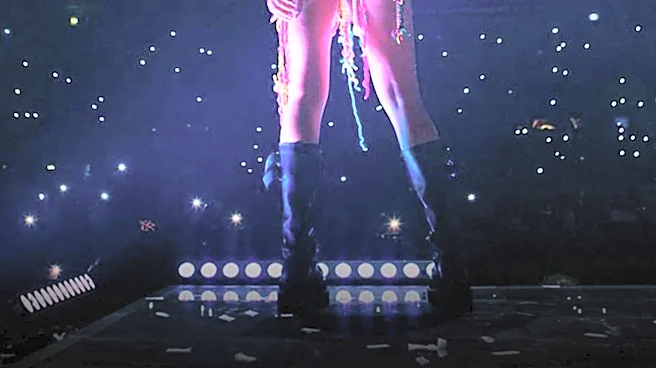
set. Her fourth studio album, 'Wor$t Girl in America,' was conceived as a potential final album, reflecting a shift from her earlier 'pinkish, delusional chic' to a 'Middle American sleaze' aesthetic. The album includes introspective tracks like 'Brittany Murphy,' which addresses depression and suicidal ideation. The North American leg of her tour, announced in March, sold out rapidly, leading to venue upgrades and additional dates, including two packed shows at the Shrine in Los Angeles. Her live performances are characterized by a blend of pop and hard techno with 'Americana scuzz,' featuring a rock band setup and showcasing her powerful and versatile vocal range, which combines elements of Dua Lipa, Chappell Roan, Ariana Grande, and Courtney Love.
Why It's Important?
Slayyyter's mainstream breakthrough is important for the U.S. music industry as it highlights the evolving pathways to success for artists who initially build a subcultural following. Her journey from struggling to break even on tours to selling out major venues demonstrates the power of viral hits and strategic festival appearances in catapulting artists into wider recognition. The shift in her artistic persona and musical style, embracing 'Middle American sleaze' and more introspective themes, reflects a broader trend in pop music towards authenticity and vulnerability. Her ability to blend pop, hard techno, and Americana elements showcases a genre-bending approach that appeals to diverse audiences and pushes creative boundaries. This success story provides a compelling case study for emerging artists on how perseverance, artistic evolution, and a strong connection with a dedicated fanbase can lead to significant career milestones, influencing marketing strategies and artist development within the industry.
What's Next?
Following the success of her 'Worst Girl in America' tour and album, Slayyyter is poised to solidify her position in the mainstream pop landscape. Her ability to sell out large venues and garner significant attention suggests that she will continue to embark on extensive tours, potentially expanding to international markets. The critical and audience reception of her evolved sound indicates that future musical releases will likely continue to explore themes of authenticity and genre fusion. Her strong visual brand, which has inspired audience attire, suggests a continued emphasis on aesthetic and performance art in her shows and music videos. Slayyyter's journey from a niche artist to a mainstream success story will likely inspire other artists to pursue unique artistic visions and leverage digital platforms for audience engagement. Fans can anticipate more dynamic live performances and innovative musical projects that further define her unique place in contemporary pop music.
Beyond the Headlines
Slayyyter's artistic evolution and mainstream success carry deeper cultural implications, particularly in her embrace of 'Middle American sleaze' and her candid exploration of mental health themes. This aesthetic choice challenges conventional pop glamor, offering a more raw and relatable image that resonates with audiences seeking authenticity. Her song 'Brittany Murphy,' addressing depression and suicidal ideation, contributes to the growing public discourse around mental health awareness in the entertainment industry, destigmatizing these topics for her fanbase. The transformation of her audience, from 'Twitter gays' to a broader mainstream following, reflects the increasing fluidity of subcultures and their integration into popular culture. Her ability to make both low-budget and larger-budget productions 'look cool' speaks to a broader cultural appreciation for resourcefulness and artistic vision over sheer financial backing. Slayyyter's journey underscores the power of art to reflect and shape societal attitudes, particularly concerning identity, vulnerability, and the redefinition of what is considered 'mainstream' or 'cool.'