








What's Happening?
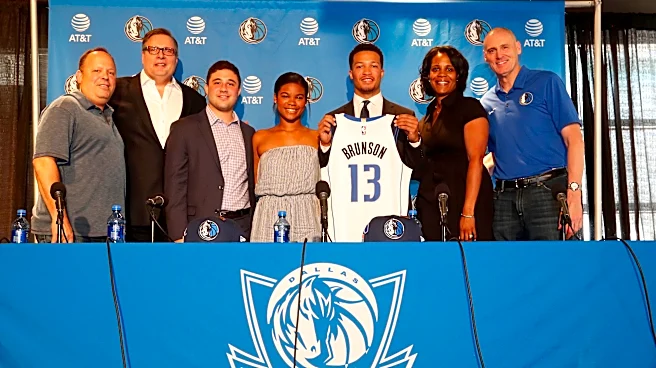
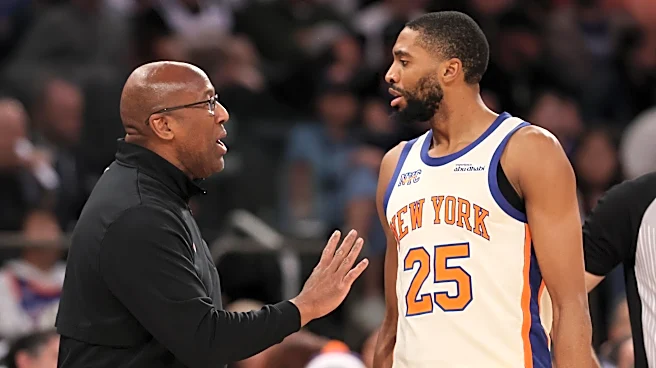
Mark Cuban, minority stakeholder of the Dallas Mavericks, discussed the team's decision to let Jalen Brunson leave for the New York Knicks during the 2022 NBA free agency. Cuban admitted that the Mavericks did not anticipate Brunson's breakout performance
and star potential, which became evident when Luka Dončić was injured. Brunson's performance in the 2022 playoffs increased his market value, leading to a lucrative contract with the Knicks. The Mavericks had the opportunity to sign Brunson to a four-year, $55.5 million extension before the 2021-22 season but did not make the offer in time. Cuban acknowledged the team's misjudgment and the challenges of managing player contracts and team dynamics.
Why It's Important?
The departure of Jalen Brunson highlights the complexities of NBA team management, particularly in evaluating player potential and contract negotiations. For the Mavericks, losing Brunson to the Knicks underscores the importance of timely decision-making and foresight in player development. This situation serves as a learning experience for the Mavericks and other teams in balancing financial constraints with talent retention. Brunson's success with the Knicks also illustrates the impact of player movement on team performance and fan engagement, as well as the potential for narratives of regret and revisionist history in sports management.
What's Next?
The Mavericks will likely continue to evaluate their roster and make strategic decisions to strengthen the team. Learning from the Brunson situation, the team may adopt a more proactive approach in contract negotiations and player evaluations. The Mavericks' management will need to focus on building a cohesive team around star player Luka Dončić, ensuring that future personnel decisions align with long-term goals. Additionally, the team's performance in upcoming seasons will be closely watched by fans and analysts, particularly in light of Brunson's success with the Knicks.