

What's Happening?
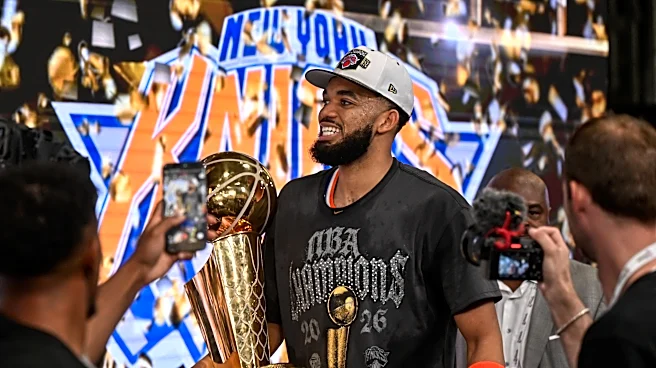
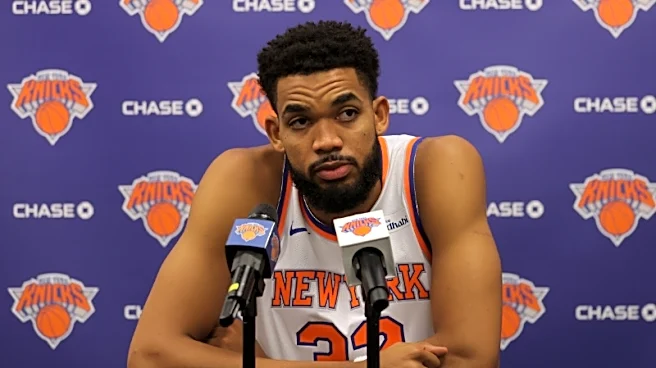
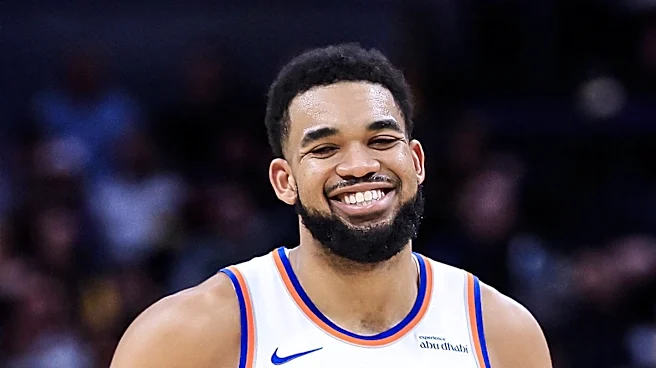
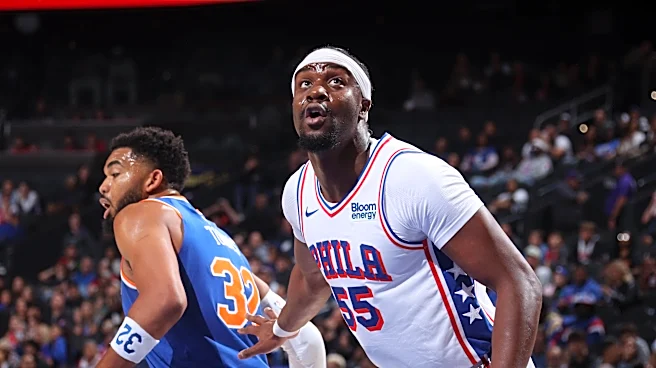
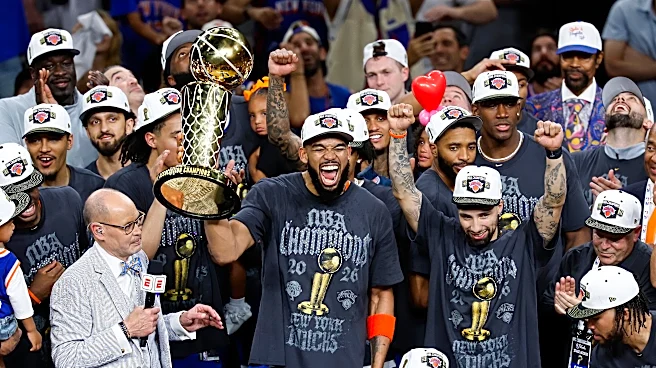
Karl-Anthony Towns, an All-Star center for the New York Knicks, has publicly voiced his frustration regarding the lack of progress in his contract extension negotiations with the team. Towns is eligible for a four-year extension worth up to $276 million,
but discussions have reportedly stalled due to the Knicks' desire for him to take a significant pay cut. Towns stated that while he is willing to make financial sacrifices to keep the championship-winning team together, the current offers do not adequately reflect his value. This public declaration follows a period of private negotiations and highlights a significant financial disagreement between the player and the organization. The Knicks' owner, James Dolan, has previously expressed reluctance to exceed the NBA's second apron, which imposes punitive financial penalties on teams with high payrolls.
Why It's Important?
This public disagreement over Karl-Anthony Towns' contract extension is critically important for the New York Knicks' future and their ability to sustain their championship-winning roster. The financial implications are substantial, as the team aims to balance rewarding key players with maintaining financial flexibility under the NBA's collective bargaining agreement, particularly the second apron rules. If Towns and the Knicks cannot reach a mutually agreeable extension, it could create uncertainty and tension within the team, potentially impacting player morale and on-court performance. The situation also sets a precedent for future negotiations with other core players like Jalen Brunson and OG Anunoby, who will also be eligible for significant extensions. The outcome of these talks will determine whether the Knicks can retain their championship core or if they will be forced to make difficult roster decisions, potentially altering their competitive window and long-term strategy.
What's Next?
The contract negotiations between Karl-Anthony Towns and the New York Knicks are expected to continue, although no immediate resolution is anticipated. Both sides have leverage: Towns has proven his value with a historic playoff performance, while the Knicks hold his current contract and the potential for a long-term deal. The team will likely continue to seek a deal that aligns with their financial strategy of staying below the second apron, while Towns will push for an offer that he feels appropriately compensates him. The situation could extend into the regular season, potentially creating a distraction for the team. The Knicks may also wait to see how Towns performs in the upcoming season, particularly regarding his health and consistency, before committing to a long-term, high-value contract. The market for a 32-year-old center in 2027, when Towns' player option would come into play, will also be a factor in future negotiations.
Beyond the Headlines
This contract dispute highlights the complex interplay between player value, team financial strategy, and the evolving landscape of NBA economics. The NBA's second apron rules are designed to curb excessive spending, forcing teams to make difficult choices about roster construction and player compensation. For players, the decision to prioritize financial security versus team success and legacy is a recurring theme. Towns' willingness to take a discount, but not an 'unreasonable' one, reflects the delicate balance players must strike. This situation also underscores the psychological impact of contract uncertainty on athletes, as public discussions about their worth can affect their focus and motivation. The outcome of these negotiations could serve as a case study for other NBA franchises navigating similar financial constraints and player demands, influencing future contract strategies across the league and shaping the perception of player loyalty versus market value.