






What's Happening?
Delta CEO Ed Bastian recently stated that flights from Atlanta to LaGuardia take longer today than when Delta first launched the route in the 1950s. However, historical records indicate that Delta did not begin service to LaGuardia until October 1, 1969.
Delta's initial New York service commenced at Newark Airport. The airline's August 1957 timetable shows Delta's four-engine Flying Scot daytime coach flights using Idlewild (now JFK), while other flights utilized Newark. The distinction between serving New York and a specific New York airport has historically impacted airlines. For instance, New York Mayor Fiorello La Guardia famously refused to deplane in Newark in 1934, insisting his ticket meant New York City, leading to his flight continuing to Floyd Bennett Field in Brooklyn, an existing New York City airport at the time. Delta's entry into the New York market was a gradual process, built through acquisitions and strategic deals, rather than an early presence at LaGuardia.
Why It's Important?
This discrepancy highlights the competitive and often complex history of airline operations in major metropolitan areas like New York. For airlines, securing prime airport access is crucial for market share and customer loyalty, particularly for high-spending business travelers. The historical struggle to gain slots at key airports like LaGuardia, as seen with Delta's late entry and subsequent acquisitions (Northeast in 1972, Pan Am's transatlantic operations in 1991, and the US Airways slot swap in 2011), underscores the strategic importance of airport infrastructure. The narrative also touches upon the broader economic impact of airline presence, including co-branded credit card spending, which Delta connects to large coastal metropolitan economies and its premium and loyalty growth. Misrepresenting historical facts, even inadvertently, can affect public perception and the credibility of airline executives in a highly competitive industry.
What's Next?
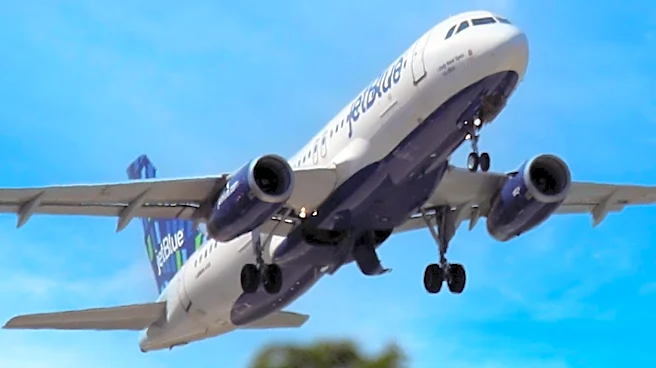
The airline industry will continue to prioritize access to major hubs like New York's airports. Delta's ongoing strategy, including its significant investment in the LaGuardia terminal project and its Blue Sky partnership with JetBlue for JFK access, demonstrates the continued focus on strengthening its New York presence. The emphasis on co-branded credit card programs and loyalty benefits will likely intensify as airlines seek to capture high-value customers. Future developments will likely involve further strategic alliances, slot acquisitions, and infrastructure investments to enhance competitive positioning in key markets. The accuracy of historical claims by airline leaders may face increased scrutiny, particularly in an era of readily available information.
Beyond the Headlines
The historical context of airline operations in New York reveals a deeper struggle for market dominance and the evolution of air travel. The anecdote of Mayor La Guardia refusing to deplane in Newark illustrates the long-standing consumer expectation for specific airport access, which continues to influence airline strategies. The regulatory environment, particularly the role of the Civil Aeronautics Board in deciding routes, played a significant role in shaping airline networks. Furthermore, the financial implications of airline loyalty programs, such as Delta's partnership with American Express, extend beyond ticket sales, influencing a substantial portion of U.S. GDP. The challenges faced by airlines in meeting financial targets, even with inflation, underscore the dynamic and often unpredictable nature of the aviation business and its broader economic impact.