




What's Happening?
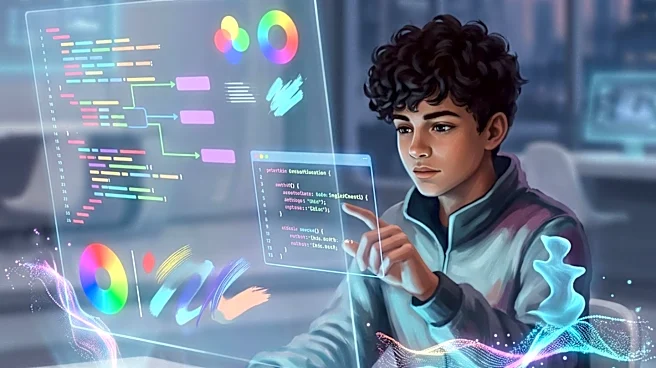
Amp Code, or Amp, is an AI coding agent developed by Amp Frontier Corporation, a company that spun off from Sourcegraph in December 2025. Amp functions as a development environment where users describe tasks in natural language, and the agent reads code,
edits files, runs commands and tests, and can manage pull requests. It operates in cloud machines called 'orbs,' native applications, and the terminal. The platform offers a free 'Hobby' tier, allowing users to bring their own API keys or subscriptions from model providers like ChatGPT or Claude without additional token fees from Amp. Paid tiers, such as 'Megawatt' at $20 a month, include agent usage and orb minutes. Amp supports models from various labs, and its npm package transitioned from `@sourcegraph/amp` to `@ampcode/cli` in May 2026. The agent emphasizes collaborative features, allowing shared threads and persistent cloud-based work even when a user's local machine is offline.
Why It's Important?
The emergence of AI coding agents like Amp Code signifies a significant shift in software development practices, particularly in the U.S. tech industry. By automating routine coding tasks, Amp can enhance developer productivity, potentially accelerating project timelines and reducing development costs for businesses. The free Hobby tier, coupled with the 'bring your own key' model, democratizes access to advanced AI coding tools, enabling smaller startups and individual developers to leverage sophisticated AI without prohibitive upfront costs. This could foster innovation and create a more competitive landscape in software development. However, the reliance on cloud-based 'orbs' and the associated billing for these resources introduce new cost management considerations for users, especially for larger projects or teams. The ability to choose from multiple AI models also allows developers to select the best tool for specific tasks, promoting flexibility and efficiency in their workflows.
What's Next?
Amp Code is expected to continue evolving rapidly, with frequent updates to its CLI and desktop applications. Users should regularly check Amp's pricing page and documentation, as features and costs can change. The platform's focus on supporting various AI models suggests ongoing integration with new advancements in AI research. Future developments may include enhanced collaboration tools, broader compatibility with different development environments, and more sophisticated AI capabilities for complex coding challenges. The company's independent research lab status indicates a commitment to pushing the boundaries of AI agent technology. Users will need to stay informed about how to optimize their usage to manage costs, particularly concerning orb minutes and credit consumption for non-model tools like web search or image generation.
Beyond the Headlines
The rise of AI coding agents like Amp Code raises broader questions about the future of human-computer collaboration in creative and technical fields. While these tools promise increased efficiency, they also prompt discussions about the evolving skill sets required for developers. The ability to effectively prompt, steer, and integrate AI agents into workflows will become increasingly crucial. Ethical considerations regarding code ownership, intellectual property, and potential biases embedded in AI-generated code will also gain prominence. Furthermore, the shift towards cloud-based development environments and the 'agent-as-a-service' model could reshape how software teams are structured and how projects are managed, potentially leading to new paradigms in remote work and distributed development. The distinction between free and paid features, especially concerning the use of external API keys versus Amp's own credits, highlights the complex economic models emerging in the AI tools market.