





What's Happening?
The American Soybean Association (ASA) is actively expanding its network of industry partnerships to foster innovation and address challenges within the soybean sector. These collaborations extend beyond financial support, bringing in diverse perspectives,
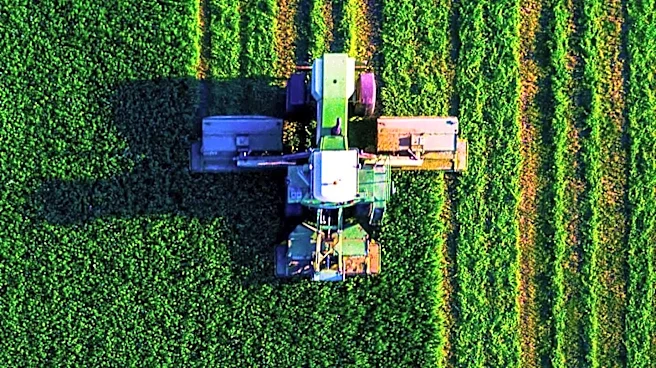
technology, and market insights. Recent additions to ASA's Innovation to Market (I2M) JumpStart Corporate membership include Field Logic Agronomy, which offers agronomic expertise, and Meristem, focusing on crop inputs and biological solutions. CLAAS has joined to provide advanced equipment and harvesting technology, while Atticus contributes expertise in crop protection. Louis Dreyfus Company offers a global view on agricultural markets. The NSF ND AgriTech Incubator has also joined I2M, representing the next generation of agricultural innovation and entrepreneurs. Additionally, CHS has renewed its partnership, highlighting the evolution of long-standing relationships. These partnerships aim to ensure the farmer's voice is central to discussions about technology, markets, and the future of agriculture, while also providing ASA with a deeper understanding of the broader agricultural value chain.
Why It's Important?
These strategic partnerships are crucial for the U.S. agricultural industry, particularly for soybean farmers, as they facilitate the integration of cutting-edge technologies and sustainable practices. By collaborating with diverse entities, ASA can better navigate complex challenges such as food production requirements, environmental concerns, and market fluctuations. The involvement of companies specializing in biological solutions, advanced equipment, and crop protection signifies a shift towards more sustainable and efficient farming methods, which can lead to reduced reliance on chemical fertilizers and improved soil health. This collaborative approach helps to accelerate the development and adoption of innovations that can enhance crop yield and resilience. Ultimately, these partnerships aim to strengthen the competitiveness of the U.S. soybean industry by ensuring farmers have access to the latest advancements and their perspectives are considered in shaping agricultural policies and market strategies.
What's Next?
The American Soybean Association is expected to continue fostering and expanding these industry partnerships, with an ongoing focus on integrating new technologies and insights into the soybean farming community. The emphasis will likely remain on translating scientific innovations into practical agricultural solutions that benefit farmers directly. Future initiatives may include further collaborations in areas such as precision agriculture, microbial research, and scalable biological manufacturing, as indicated by the broader trends in agricultural biotechnology. The goal is to ensure that the U.S. soybean industry remains at the forefront of agricultural innovation, adapting to evolving market demands and environmental considerations. These partnerships will also likely play a role in influencing policy and regulatory frameworks to support the adoption of sustainable agricultural practices and biological crop inputs.
Beyond the Headlines
The trend of agricultural organizations forming broad industry partnerships reflects a deeper recognition that no single entity possesses all the solutions for the complex challenges facing modern agriculture. This collaborative model highlights a shift towards an integrated ecosystem approach, where diverse stakeholders—from startups and technology providers to established corporations and research institutions—work together. This integration is vital for addressing ethical considerations related to food safety, environmental sustainability, and the economic viability of farming. By bringing together different perspectives, these partnerships can help bridge the gap between scientific discovery and practical application, ensuring that innovations are not only effective but also accessible and relevant to farmers' needs. This collaborative framework could set a precedent for other agricultural sectors, promoting a more resilient, sustainable, and economically robust food system in the U.S.