






What's Happening?
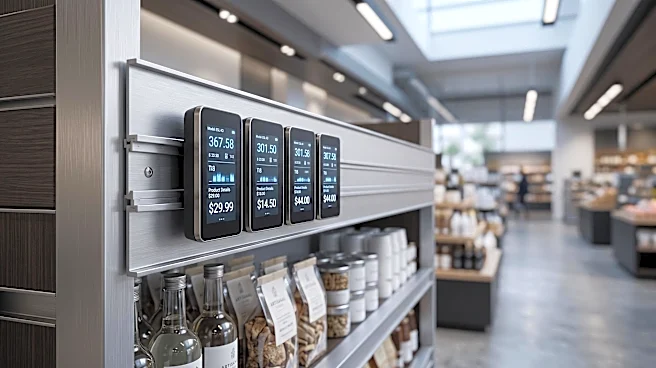
SOLUM CEO Sungho Jun is steering the company's focus beyond traditional electronic shelf labels (ESL) to broader retail solutions. Jun views ESL not merely as a hardware product for digitizing price tags, but as a foundational technology to address operational
challenges in physical retail. The company has invested significantly in ESL technology, enduring over six years of losses, based on a vision that ESL could play a more expansive role in the future of retail. This long-term strategy aims to leverage ESL to improve store operations, enhance efficiency, and provide better visibility into retail processes. The goal is to create practical value for retailers by enabling real-time updates, reducing manual tasks, and helping stores adapt quickly to changing promotions and operational needs. This approach recognizes the enduring importance of physical stores for customer experience, despite the growth of online commerce.
Why It's Important?
This strategic shift by SOLUM highlights a significant trend in the retail technology sector, emphasizing integrated solutions over standalone hardware. For U.S. retailers, this means a potential for increased operational efficiency and responsiveness, which can lead to cost savings and improved customer experiences. By automating price changes and providing real-time data, retailers can optimize inventory management, streamline promotional activities, and reduce labor costs associated with manual tasks. The focus on broader retail solutions, rather than just price tags, suggests that technologies like ESL will become integral to a connected, data-driven retail environment. This evolution can help physical stores remain competitive against online retailers by enhancing the in-store experience and operational agility, ultimately benefiting both businesses and consumers through more dynamic and efficient retail environments.
What's Next?
SOLUM plans to continue building on its ESL foundation by developing solutions that address the evolving needs of physical retail. This includes moving beyond individual products to offer comprehensive systems that integrate various in-store technologies. The company anticipates that its long-term investment in ESL will begin to yield significant results, as retailers increasingly adopt data-driven approaches to store management. Future developments may involve further integration of ESL with other IoT devices and data analytics platforms to provide even greater operational insights and automation. This trajectory suggests a future where physical retail environments are highly connected, leveraging technology to optimize every aspect of store operations and customer engagement.
Beyond the Headlines
The deeper implication of SOLUM's strategy is the recognition of the enduring value of physical retail in an increasingly digital world. While online commerce offers convenience, the in-person experience of seeing, touching, and experiencing products remains crucial for many consumers. Technologies like ESL, when integrated into broader retail solutions, can bridge the gap between the efficiency of digital operations and the unique advantages of physical stores. This approach could lead to a redefinition of the retail landscape, where brick-and-mortar stores are not just points of sale but intelligent, dynamic hubs that offer rich, personalized experiences. The ethical consideration lies in how data collected through these connected technologies is used to enhance customer experience while respecting privacy, and how these advancements impact the nature of retail employment.