






What's Happening?
The Neoliner Origin, a pioneering wind-powered roll-on/roll-off (RoRo) cargo vessel, has completed its inaugural call at PSA Zeebrugge in Belgium, marking the addition of Zeebrugge to NEOLINE’s regular transatlantic service. This development expands the vessel's
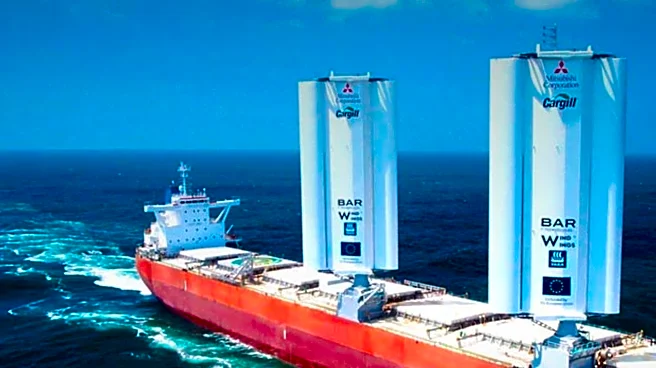
rotation to include key U.S. ports, specifically Baltimore, alongside Montoir-de-Bretagne, Saint-Pierre-et-Miquelon, and Halifax. The Neoliner Origin is a 136-meter vessel designed to primarily use wind as its propulsion source, complemented by an auxiliary diesel-electric system. It features two foldable SolidSail masts that carry 3,000 square meters of sail, allowing it to access most ports. This design enables the vessel to reduce fuel consumption by over 80% compared to conventional vessels sailing at 15 knots on its North Atlantic route. CMA CGM, a major partner of NEOLINE, has supported the development of this sustainable shipping solution and now offers the service to its customers seeking to reduce emissions in their transatlantic supply chains.
Why It's Important?
This expansion of NEOLINE’s transatlantic service, particularly with the inclusion of Baltimore, signifies a crucial step towards decarbonizing global shipping and offers U.S. businesses a more sustainable option for their supply chains. The Neoliner Origin's ability to drastically reduce fuel consumption and associated emissions addresses growing environmental concerns and regulatory pressures within the maritime industry. For U.S. importers and exporters, this provides an opportunity to lower the carbon footprint of their goods, aligning with corporate sustainability goals and consumer demand for eco-friendly products. The service also enhances connectivity between European and North American markets, potentially fostering new trade relationships and strengthening existing ones through a more environmentally responsible logistics solution. The success and expansion of such wind-powered vessels could accelerate the adoption of similar technologies across the shipping industry, driving innovation in maritime sustainability.
What's Next?
The extended rotation of the Neoliner Origin, now connecting Zeebrugge, Montoir-de-Bretagne, Saint-Pierre-et-Miquelon, Baltimore, and Halifax, is expected to take five weeks in summer and six weeks in winter, completing approximately ten rotations per year. This expansion adds only a few days to the overall rotation while maintaining transit-time commitments for existing customers. NEOLINE and CMA CGM will continue to monitor the service's performance and customer demand, particularly from the logistics heart of Europe, which now has direct access to this transatlantic service. The partnership aims to strengthen opportunities for return cargo, which could further optimize the vessel's efficiency and economic viability. The long-term vision includes potential future fleet expansion, indicating a commitment to scaling up this sustainable shipping model. The success of this service will likely influence investment in and development of more wind-assisted and alternative-fueled vessels in the maritime sector.
Beyond the Headlines
The Neoliner Origin's transatlantic service represents more than just a new shipping route; it embodies a significant shift in the maritime industry's approach to environmental responsibility. This initiative challenges the traditional reliance on fossil fuels and demonstrates the commercial viability of wind-powered cargo transport. The integration of such vessels into global supply chains could trigger a broader reevaluation of logistics strategies, prioritizing sustainability alongside efficiency and cost. It also highlights the potential for collaboration between innovative startups like NEOLINE and established industry giants like CMA CGM to drive meaningful change. Furthermore, the success of this project could inspire policy changes and incentives for green shipping technologies, fostering a more sustainable global trade ecosystem. The ethical implications of reducing shipping's environmental impact are profound, contributing to cleaner oceans and air, and supporting global efforts to combat climate change.