
What's Happening?
A Washington, D.C. policy forum, titled 'Physical AI in America: Robotics, Manufacturing and the Allied Industrial Base,' supported by LG Group, convened policymakers, technology leaders, and manufacturing
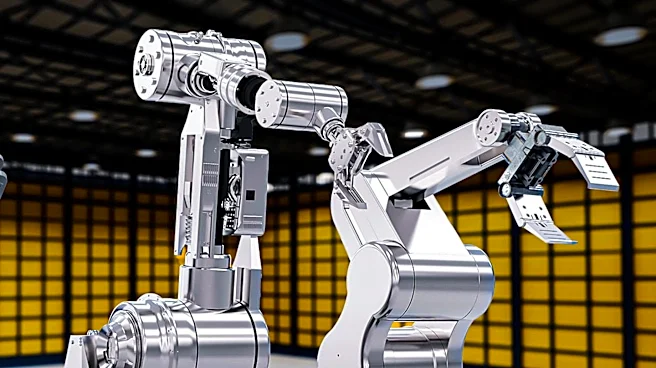
experts to discuss the transformative role of Physical AI. The forum focused on how Physical AI, which extends beyond software and computing into robotics, autonomous systems, and smart factories, is reshaping U.S. manufacturing, supply chains, and industrial competitiveness. Discussions covered critical topics such as advanced manufacturing, semiconductors, batteries, energy infrastructure, resilient supply chains, and the importance of cooperation among trusted allies, including the U.S. and South Korea. Ambassador Yunju Ko, President of the LG Global Strategy Center, emphasized that long-term AI leadership will depend on both industrial application and closer collaboration with strategic partners.
Why It's Important?
This forum is crucial because it addresses the strategic imperative of maintaining U.S. leadership in artificial intelligence, particularly as AI applications move into the physical economy. The integration of Physical AI into manufacturing and supply chains has the potential to significantly enhance productivity, efficiency, and resilience, which are vital for national economic security and global competitiveness. The emphasis on allied partnerships, such as the collaboration between the U.S. and South Korea, highlights the recognition that no single nation can achieve AI dominance alone. Securing robust supply chains for critical components like semiconductors and batteries is paramount to preventing disruptions and ensuring the continuous advancement of AI-driven industries. The policy discussions aim to identify the industrial capacity and policy frameworks needed to support this technological evolution.
What's Next?
The insights from this policy forum are expected to inform future policy decisions and strategic investments aimed at bolstering the U.S. industrial base and AI leadership. The call for closer collaboration with strategic partners suggests potential for new international agreements and joint ventures in AI research, development, and manufacturing. Policymakers may consider new incentives or regulatory frameworks to accelerate the adoption of Physical AI in U.S. industries and to strengthen domestic supply chains. The ongoing dialogue among government, industry, and academia will likely continue to shape the national strategy for AI, focusing on translating AI innovations into tangible industrial competitiveness and economic growth. The forum's outcomes could also influence educational and workforce development initiatives to prepare for the demands of an AI-driven economy.
Beyond the Headlines
The shift towards Physical AI represents a profound technological and economic transformation, moving AI from abstract algorithms to tangible, real-world applications. This evolution carries significant implications for labor markets, potentially automating many tasks and requiring a re-skilling of the workforce. Ethically, the deployment of autonomous systems and robotics in manufacturing raises questions about human-machine interaction, job displacement, and the responsibility for decisions made by AI. Culturally, the widespread adoption of smart factories and AI-driven systems could redefine the nature of work and industrial production, leading to a more interconnected and automated industrial landscape. The forum's focus on allied partnerships also underscores the geopolitical dimension of AI, where technological leadership is increasingly intertwined with international alliances and economic diplomacy, shaping the global balance of power.