







What's Happening?
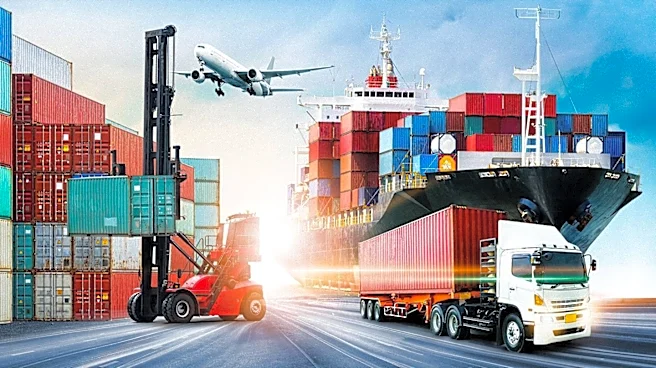
Flexport is playing a central role in navigating the ongoing global supply chain crisis, facilitating the movement of goods worldwide. The company emphasizes its commitment to addressing global challenges that impact business, society, and the environment.
A key area of focus for Flexport is integrating climate intelligence directly into its platform, enabling supply chain leaders to consider both cost and carbon emissions simultaneously. This initiative comes as regulations and industry standards increasingly demand better measurement and management of emissions from companies. Flexport aims to move beyond traditional reporting tools by providing actionable insights that influence decisions on routing, shipping times, and inventory levels, thereby helping customers identify opportunities to reduce emissions within their supply chains.
Why It's Important?
The integration of climate intelligence into supply chain management by Flexport is significant because it directly addresses the dual pressures faced by supply chain leaders: cutting costs and reducing carbon footprints. This approach can lead to more sustainable and efficient global trade practices. By embedding emissions data into operational decisions, Flexport empowers businesses to make informed choices that benefit both their bottom line and environmental goals. This is particularly crucial as regulatory bodies and industry standards worldwide are increasing expectations for corporate environmental responsibility. The ability to weigh cost, speed, and emissions together can help companies proactively adapt to evolving market demands and regulatory landscapes, potentially mitigating future risks associated with climate change and carbon taxes.
What's Next?
Flexport plans to continue developing and expanding its climate intelligence capabilities, making lower-emission choices more accessible and actionable within existing workflows. The company will focus on helping customers understand the broader environmental footprint of their supply chains, extending beyond just freight. This involves building products that provide insights into various aspects of the supply chain to identify emission reduction opportunities. Flexport also aims to deliver incremental improvements, balancing speed, scope, maintainability, and data accuracy. The company's strategy includes close collaboration between its Climate team and customers to ensure that the solutions developed directly address user needs and contribute to a more sustainable global commerce ecosystem.
Beyond the Headlines
The initiative by Flexport to embed climate intelligence into supply chain decisions highlights a broader shift in the business world towards integrating sustainability with core operational strategies. This move suggests that environmental considerations are no longer just a compliance issue but are becoming integral to competitive advantage and risk management. By offering tools that allow companies to optimize for both cost and carbon, Flexport is contributing to a future where economic efficiency and environmental responsibility are not mutually exclusive. This could set a precedent for other logistics and technology companies, fostering a more environmentally conscious global trade network and potentially influencing policy discussions around sustainable supply chain practices.