






What's Happening?
The thrifting and resale market is experiencing a significant boom, influenced by several key trends, according to reports from resale marketplace Fleek and live commerce platform Whatnot. Y2K fashion is making a strong comeback, with searches for brands
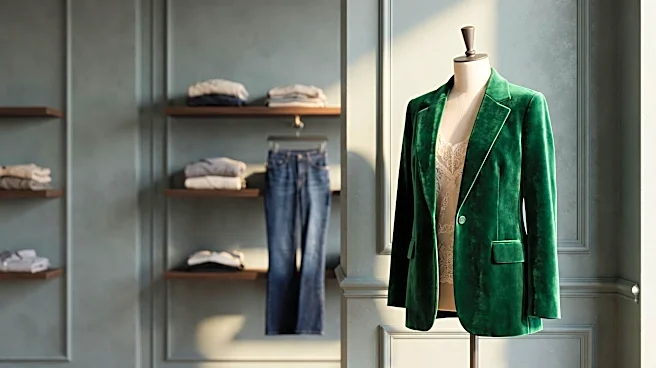
like American Eagle increasing by over 1,000% year-on-year, and nearly half of resellers specializing in this aesthetic. Opulent vintage styles are also gaining traction, evidenced by a 19% rise in searches for 'opulent vintage' and substantial sales growth for items like brooches, statement jewelry, fringe, velvet, and lace. Live selling is emerging as a crucial sales channel, with 45% of full-time resellers utilizing it, and 79% of live sellers reporting that it outperforms static listings. The demand for specific items reflects a shift away from pandemic-era loungewear, with bootcut jeans seeing a 277% increase in interest and basic camisoles up by 193%. Sweaters are the most sought-after product category for AW26, showing a 50% year-on-year increase, while going-out clothes and denim are also experiencing sharp rises. This resurgence is leading to reselling becoming a full-time career for many, with six out of ten individuals either working full-time in resale or actively working towards it.
Why It's Important?
This surge in the thrifting and resale market signifies a notable shift in consumer behavior and retail dynamics within the U.S. The move towards Y2K and opulent vintage fashion indicates a growing consumer preference for unique, sustainable, and nostalgic clothing options, potentially impacting fast fashion brands as consumers seek more distinctive styles. The rise of live selling as a 'serious sales channel' highlights the evolving landscape of e-commerce, where interactive and real-time engagement with sellers is becoming increasingly important. This trend could lead to new business models and opportunities for entrepreneurs, as reselling transitions from a side hustle to a viable full-time career. The pressure on stock, with 64% of resellers still relying on charity/thrift shops, suggests a potential strain on traditional secondhand sources and could drive innovation in sourcing methods, such as accessing liquidation and deadstock. Furthermore, the shift away from loungewear towards more formal and printed clothing reflects a broader societal return to pre-pandemic dressing habits, influencing design and production decisions across the fashion industry. This trend also underscores a growing environmental consciousness, as consumers increasingly opt for secondhand items to reduce waste and promote sustainability.
What's Next?
The continued growth of the resale market is likely to prompt further innovation in platform development and seller support. As resellers increasingly rely on multiple platforms (averaging 2.8 platforms per seller), there will be a demand for more efficient tools and services to manage inventory and sales across various channels. The willingness of sellers to 'jump ship' if a platform underperforms suggests a competitive environment among resale platforms, driving them to enhance features and seller incentives. The increasing professionalization of reselling, with many pursuing it as a full-time career, will likely lead to the development of more structured training, resources, and community support for these entrepreneurs. The demand for specific items like bootcut jeans, camisoles, and sweaters will continue to influence inventory acquisition for resellers and potentially inspire new collections from mainstream fashion brands. The growing popularity of live selling indicates that more platforms will integrate live commerce features, and sellers will invest in improving their live selling strategies to maximize engagement and sales. Additionally, the pressure on stock availability may lead to new partnerships between resellers and brands or liquidation companies to secure inventory, especially in light of new regulations banning the destruction of unsold stock by large companies.
Beyond the Headlines
The booming thrifting and resale market has deeper implications beyond immediate sales trends. Ethically, it promotes a more sustainable consumption model by extending the lifecycle of clothing and reducing textile waste, aligning with broader environmental goals. This shift challenges the traditional linear fashion economy and encourages a circular approach, which could have long-term positive impacts on resource conservation and pollution reduction. Culturally, the embrace of Y2K and opulent vintage styles reflects a cyclical nature of fashion, where past trends are reinterpreted and given new life, fostering a sense of nostalgia and individuality. The rise of reselling as a full-time career also highlights a changing perception of entrepreneurship and work, where individuals are leveraging digital platforms and their passion for fashion to create independent livelihoods. This trend could empower more individuals to participate in the economy outside traditional employment structures. Moreover, the emphasis on live selling addresses a fundamental human need for connection and authenticity in commerce, bridging the gap between online shopping and the in-person retail experience. This evolution in consumer interaction could redefine customer service and brand loyalty in the digital age, emphasizing transparency and direct engagement.