


What's Happening?
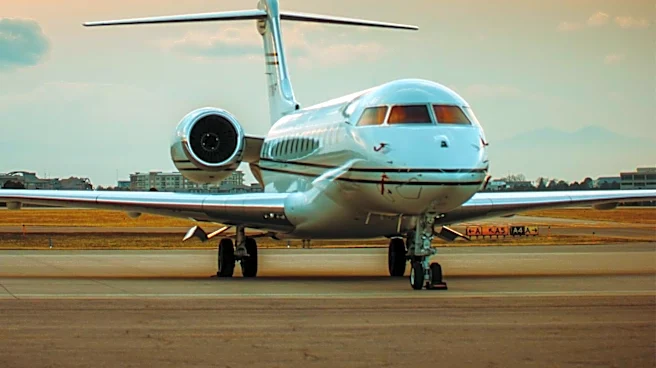
Michael Bloomberg's Dassault Falcon 900LX private jet, tail number N47EG, completed a flight from Westchester County Airport in White Plains, New York, to L.F. Wade International Airport in Hamilton, Bermuda, on Friday, November 27, 2026. The flight covered
a distance of 686 nautical miles and lasted 1 hour and 43 minutes. The aircraft departed Westchester at 13:40 UTC and landed in Bermuda at 15:23 UTC. This flight is part of a broader pattern of travel for Bloomberg's two Falcon 900 jets, which made 40 flights between September 5 and November 25, 2026, visiting 11 airports across 5 countries and covering approximately 23,704 nautical miles in the 30 days prior to this specific flight.
Why It's Important?
The frequent international travel by Michael Bloomberg's private jet highlights the mobility and global reach of high-net-worth individuals and their business operations. As the founder of Bloomberg L.P. and a UN Special Envoy for Climate Ambition and Solutions, his travel patterns can reflect both business demands and his engagement in international climate discussions. The use of private aviation, while offering convenience and efficiency for individuals like Bloomberg, also draws attention to the environmental impact of such travel, particularly given his role in climate advocacy. The data on fuel consumption and CO2 emissions for this flight—estimated at 547 US gallons of fuel and 5,256 kilograms of CO2—underscores the carbon footprint associated with private jet usage, a topic of increasing public and environmental concern.
What's Next?
Given Michael Bloomberg's continued roles as a business leader and a UN Special Envoy for Climate Ambition and Solutions, his private jet travel is likely to continue as he navigates global business interests and international climate initiatives. The ongoing tracking of such flights by platforms like Celebplanes will continue to provide insights into the travel patterns of prominent figures. As public awareness and scrutiny of carbon emissions, particularly from private aviation, grow, there may be increased pressure on individuals like Bloomberg to address the environmental impact of their travel, potentially leading to investments in sustainable aviation fuels or carbon offset programs. His continued engagement in climate solutions may also influence broader discussions on how high-net-worth individuals can reconcile their travel needs with environmental responsibilities.
Beyond the Headlines
The flight of Michael Bloomberg's private jet from New York to Bermuda, while a routine event for many wealthy individuals, touches upon broader societal discussions regarding wealth, privilege, and environmental responsibility. As a prominent advocate for climate action, Bloomberg's use of private aviation presents a complex narrative. It highlights the tension between the practical demands of global leadership and business, which often necessitate rapid and flexible travel, and the imperative to reduce carbon footprints. This situation often sparks debate about the personal sacrifices expected of climate advocates versus the systemic changes required to address climate change. The detailed tracking of private jet movements also reflects an increasing public interest in the activities of the ultra-wealthy, driven by concerns about economic inequality and environmental justice.