







What's Happening?
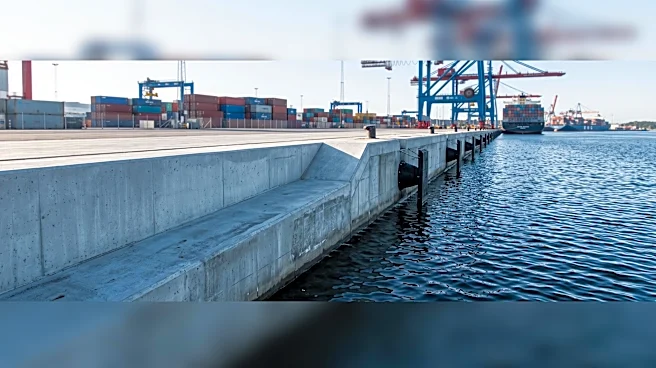
The Port of Gothenburg has successfully completed the reinforcement of the south quay at its container terminal, a project that spanned over two years. This work was finished on schedule and within budget, marking a significant milestone for the Skandia
Gateway project. The reinforcement involved strengthening the westernmost 700 meters of the quay. With this phase concluded, the project will now proceed to its next major stage, which includes blasting and dredging operations closest to the quay, set to commence on October 13. These subsequent works will involve removing over 200,000 cubic meters of soft dredged material and approximately 30,000 cubic meters of rock. The area adjacent to the quay is being specifically designed to accommodate vessels with a maximum draught of 17.5 meters, with these works anticipated to be finalized by March 2027. Concurrently, the Swedish Maritime Administration is managing the procurement for more extensive blasting and dredging activities in the fairway and turning basin, alongside modifications to navigational aids, with a contract expected to be signed in early 2027.
Why It's Important?
The completion of the quay reinforcement at the Port of Gothenburg is crucial for enhancing the port's capacity and competitiveness in global shipping. By enabling the port to accommodate larger container vessels, specifically those up to 430 meters long, 65 meters wide, and with draughts up to four meters deeper than current callers, the project will significantly improve logistical efficiency and reduce shipping costs for businesses utilizing the port. This upgrade positions the Port of Gothenburg as a more attractive hub for international trade, potentially increasing cargo volumes and strengthening its role in the supply chain for European and U.S. markets. The ability to handle mega-vessels means fewer port calls for shipping lines, leading to economies of scale and potentially more direct routes, which can benefit consumers through more efficient delivery of goods. The investment underscores a strategic move to adapt to the evolving demands of modern maritime transport, ensuring the port remains a vital gateway for trade.
What's Next?
Following the successful completion of the quay reinforcement, the Skandia Gateway project will immediately transition into its next critical phase: blasting and dredging works closest to the quay, starting October 13. These operations are projected to conclude by March 2027. In parallel, the Swedish Maritime Administration is actively procuring services for more extensive blasting and dredging in the fairway and turning basin, along with necessary modifications to navigational aids, with a contract expected to be signed in early 2027. The work in the fairway and turning basin is scheduled to begin in August 2027. The overarching goal is for the new fairway and quay to become fully operational before the end of 2028, allowing the Port of Gothenburg to regularly host the larger container vessels it is being designed to accommodate. This phased approach ensures a systematic upgrade of the port's infrastructure to meet future shipping demands.
Beyond the Headlines
The Port of Gothenburg's infrastructure upgrade, particularly its capacity to handle larger container vessels, has broader implications for global trade dynamics and environmental sustainability. By accommodating mega-vessels, the port contributes to the 'ship larger, ship less often' trend in maritime logistics, which can lead to reduced fuel consumption per container and, consequently, lower greenhouse gas emissions. This efficiency gain aligns with global efforts to decarbonize the shipping industry. Furthermore, the enhanced capacity could influence shipping routes and port hierarchies in Northern Europe, potentially drawing more transshipment traffic and consolidating cargo flows through Gothenburg. This could lead to increased economic activity in the region, but also places pressure on inland transportation networks to handle the larger volumes efficiently. The project also highlights the continuous need for significant infrastructure investments in ports worldwide to keep pace with the increasing size of commercial vessels and the demands of global supply chains.