





What's Happening?
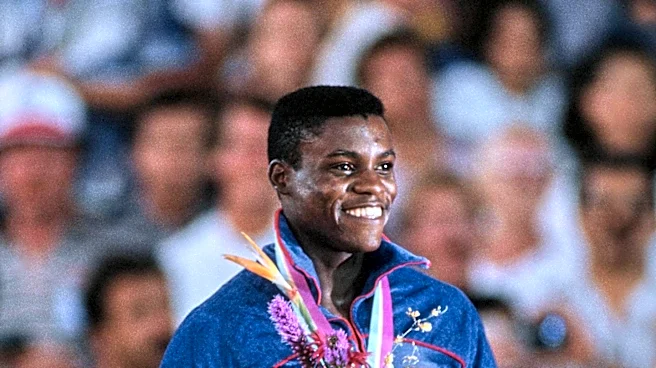
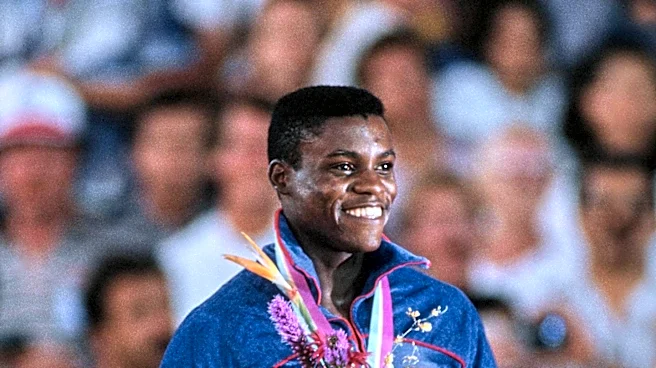
Carl Lewis, a celebrated four-time gold medalist from the Los Angeles 1984 Olympic Games, is set to return to the city for the LA28 Olympics, this time in the capacity of Head Coach for the University of Houston track & field team. This marks a significant
full-circle moment for Lewis, who views it as a 'second dream come true,' having never anticipated coaching at the Olympic level. Lewis's own Olympic journey began under the guidance of coach Tom Tellez at the University of Houston, leading to his dominant performance in 1984 where he secured gold medals in the 100m, 200m, 4x100m relay, and long jump at the Los Angeles Memorial Coliseum, the same venue designated for athletics at LA28. His current role involves mentoring a new generation of athletes, hoping to guide them to Olympic success and experience the pride his own coach once felt.
Why It's Important?
The return of Carl Lewis to the Olympic stage as a coach holds immense significance for U.S. athletics and the broader sporting community. His legendary status provides unparalleled inspiration and mentorship for young athletes at the University of Houston, potentially shaping future Olympic medalists. This transition highlights the enduring legacy of Olympic champions and their continued contribution to sports beyond their competitive careers. For the LA28 Games, Lewis's presence adds a powerful narrative, connecting the past glory of the 1984 Games with the future aspirations of a new generation. His personal connection to the Los Angeles Memorial Coliseum, where he achieved his greatest triumphs, imbues the upcoming event with historical depth and emotional resonance, reinforcing the continuity of Olympic ideals and athletic excellence in the United States.
What's Next?
As LA28 approaches, the focus will be on the development and performance of the University of Houston track & field team under Carl Lewis's guidance. His primary goal is to see his athletes qualify for and compete in the Olympic Games, with the ultimate hope of them reaching finals or winning medals. Lewis anticipates an emotional experience, recalling his own parents' presence in the stands during his competitive days. His coaching tenure will be closely watched as he attempts to replicate the success he achieved as an athlete through his mentees. The journey of his athletes towards LA28 will serve as a compelling storyline, showcasing the impact of legendary mentorship on aspiring Olympians and the ongoing pursuit of athletic excellence in the United States.
Beyond the Headlines
Carl Lewis's journey from Olympic icon to collegiate coach underscores the profound impact that legendary athletes can have on the development of their sport. His decision to dedicate himself to coaching reflects a commitment to passing on knowledge, discipline, and the Olympic spirit to younger generations. This mentorship role extends beyond technical training, encompassing the psychological and emotional aspects of elite competition. The narrative of a former champion returning to the very venue of his greatest triumphs, now as a guide, speaks to the cyclical nature of athletic achievement and the enduring power of the Olympic movement. It also highlights the importance of institutional support, such as that provided by the University of Houston, in fostering athletic talent and maintaining a pipeline of future U.S. Olympians, ensuring that the legacy of excellence continues.