



What's Happening?
Savile Row, historically known for its bespoke men's tailoring, is experiencing a notable increase in female clientele, particularly from the U.S. Tailor Caroline Andrew reports that approximately 30% of her clients are now women, many of whom are based
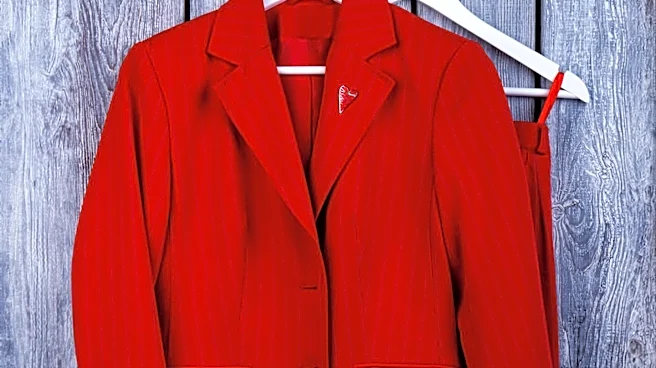
in the United States. This represents a significant shift in an industry traditionally geared towards men, where not all houses are equipped to create patterns for the female form. Andrew's approach involves collaborating with clients to create unique pieces, such as a double-breasted suit with a hidden placket in black wool barathea and a silk-satin peak lapel, paired with wide, straight-leg trousers featuring satin tape. These bespoke garments are designed to mold to the wearer's figure over time and allow for alterations, ensuring longevity and a perfect fit. Andrew maintains a robust trunk show schedule in the U.S. to cater to her American clientele.
Why It's Important?
This trend signifies a significant evolution in the luxury fashion market, particularly within the U.S. The growing demand for bespoke Savile Row tailoring among American women indicates a desire for high-quality, custom-fitted garments that offer both style and durability, moving away from fast fashion. This shift could influence U.S. fashion retailers and designers to invest more in custom tailoring services or to offer higher-quality, more adaptable ready-to-wear options for women. For the Savile Row industry, it represents a crucial expansion of its market, tapping into a previously underserved demographic and ensuring its continued relevance in a changing fashion landscape. The willingness of tailors like Caroline Andrew to adapt to female forms and collaborate on unique designs is key to this success. This trend also highlights a broader cultural movement where women are increasingly seeking investment pieces that reflect their personal style and offer long-term value, impacting consumer spending habits in the luxury sector.
What's Next?
The increasing demand from U.S. women for bespoke Savile Row tailoring is likely to encourage more tailors on 'the Row' to adapt their services to cater to female clients. This could lead to specialized training for tailors in understanding and cutting patterns for the female form, as well as the development of new design aesthetics that blend traditional Savile Row craftsmanship with modern feminine styles. We can anticipate more Savile Row houses establishing a presence or increasing their trunk show schedules in major U.S. cities to meet this growing demand. This trend may also inspire U.S.-based luxury brands and independent designers to explore or expand their own bespoke or made-to-measure offerings for women, creating a more competitive market for high-end custom clothing. Furthermore, the success of bespoke tailoring for women could influence the broader fashion industry to prioritize quality, fit, and longevity in their designs, potentially leading to a greater emphasis on sustainable and investment-worthy garments.
Beyond the Headlines
The embrace of Savile Row tailoring by U.S. women extends beyond mere fashion, touching upon themes of empowerment, individuality, and sustainability. Opting for a bespoke suit is a statement of personal agency, allowing women to define their professional and personal image with precision and confidence, rather than conforming to off-the-rack limitations. This choice also reflects a growing consciousness about ethical consumption, as bespoke garments are inherently sustainable due to their durability, timelessness, and the ability to be altered over time, reducing textile waste. The shift challenges traditional gender norms within the tailoring industry, pushing for greater inclusivity and recognition of women's diverse body shapes and style preferences. It signifies a move towards a more personalized and thoughtful approach to dressing, where clothing is seen as an investment in self-expression and quality, rather than a disposable commodity. This trend could inspire a broader re-evaluation of value in fashion, encouraging consumers to prioritize craftsmanship and longevity.