






What's Happening?
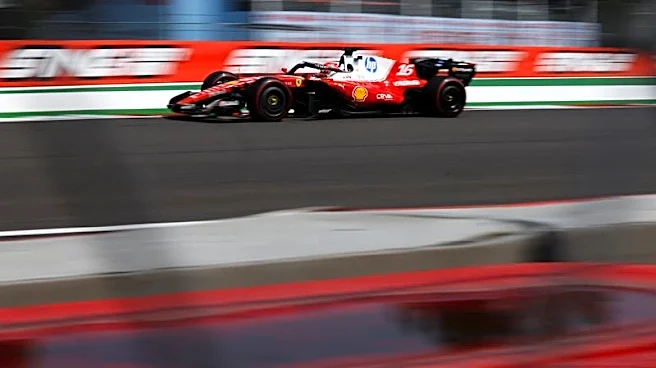
Ferrari demonstrated a strong showing in both FP1 and FP2 at the Mexican Grand Prix, with Charles Leclerc topping the timesheets. This performance initially aligned with paddock expectations that Ferrari's smaller turbo design would provide an advantage
in the high-altitude conditions. However, analysis of the practice sessions revealed that Ferrari's speed advantage was not primarily due to its turbo's quicker boost pressure. Instead, Ferrari excelled in low-speed corner performance, an area where the team has consistently performed well throughout the season. Leclerc's car showed marginal improvements through the first two corner complexes and a significant gain from Turn 12 into the stadium section. This trait allowed Leclerc to maintain tire consistency, leading to the strongest long-run performance of the afternoon, establishing Ferrari as the benchmark for the weekend. Despite this, rivals like Mercedes and Red Bull believe they are not far behind and see opportunities to challenge for the front.
Why It's Important?
Ferrari's unexpected source of advantage in Mexico shifts the competitive landscape for the Grand Prix. While rivals anticipated a turbo-related benefit, Ferrari's dominance in low-speed corners highlights its inherent car design strengths, which could be crucial on a track with many such turns. This performance could influence strategic decisions for other teams, as they might need to adjust their car setups to counter Ferrari's cornering prowess rather than focusing solely on straight-line speed. The emphasis on low-speed performance also suggests that tire management and mechanical grip will be paramount, potentially leading to a one-stop race strategy where track position becomes king. For Ferrari, maintaining this advantage through qualifying will be critical, as overtaking is notoriously difficult in Mexico, and clean air is invaluable for managing engine and brake temperatures.
What's Next?
The focus now shifts to qualifying, where single-lap pace will be paramount for securing pole position, which is often decisive in Mexico due to the difficulty of overtaking. Ferrari will need to translate its Friday practice advantage into a strong qualifying performance, an area where the team has sometimes faltered this season due to challenges in getting tires into their optimal operating window. Rivals, including Mercedes and Red Bull, will be working overnight to refine their car setups and overcome their current balance limitations, aiming to close the gap. Track temperature variations between practice and race day could also play a significant role, potentially altering tire degradation rates and influencing optimal tire choices for the race. The ability of teams to manage tire wear, particularly the rear tires, will be a key factor in determining the outcome of both qualifying and the race.
Beyond the Headlines
Ferrari's performance in Mexico underscores the complex interplay of car design, track characteristics, and strategic execution in Formula 1. The initial assumption about the turbo advantage, which proved incorrect, highlights how teams and analysts often focus on specific technical elements that may not be the ultimate deciding factor. Instead, Ferrari's consistent strength in low-speed corners, a fundamental aspect of its car's aerodynamic and mechanical package, emerged as the key differentiator. This situation also brings to light the ongoing challenge for teams to optimize their cars for varying conditions and track layouts, emphasizing that a holistic approach to performance is more effective than relying on a single component. The Mexican Grand Prix could serve as a case study in how underlying car strengths, rather than anticipated specific advantages, can dictate competitive outcomes in high-altitude racing.