
What's Happening?
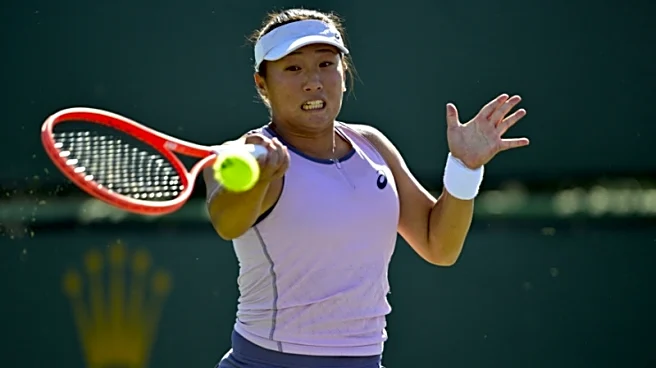
Marta Kostyuk, a 24-year-old Ukrainian tennis player, has had a remarkable and emotionally charged season, reaching her first Grand Slam semi-final at Roland-Garros and her first Wimbledon quarter-final.
She also won the Madrid title, rising to world number 15. Kostyuk's season has been deeply influenced by the ongoing war in Ukraine, leading her to openly discuss the conflict and refuse to shake hands with Russian and Belarusian players. She has been vocal about the impact of the war on her and her family, dedicating her first-round win at Roland-Garros to Ukraine after a missile strike near her parents' home in Kyiv. Her strong stance against the war and her consistent performance on court have defined her year.
Why It's Important?
Marta Kostyuk's season is significant not only for her athletic achievements but also for her role as an advocate for Ukraine amidst the ongoing conflict. Her refusal to shake hands with Russian and Belarusian players and her public statements highlight the intersection of sports and global politics, bringing attention to humanitarian issues on an international stage. Her success in major tournaments, including reaching a Grand Slam semi-final, demonstrates her resilience and determination despite the personal and emotional toll of the war. This makes her a powerful voice and an inspiring figure, showing how athletes can use their platform to address critical world events.
What's Next?
Marta Kostyuk is expected to continue her strong performance on the WTA Tour, aiming to further improve her ranking and contend for more titles. Her consistent deep runs in Grand Slams suggest she is a formidable competitor with the potential to win a major championship. Off the court, she will likely continue to use her platform to speak out about the war in Ukraine and advocate for peace and support for her country. Her actions and statements will continue to draw attention to the conflict, influencing public opinion and potentially encouraging further dialogue within the sports community regarding geopolitical issues.
Beyond the Headlines
Kostyuk's journey transcends typical sports narratives, delving into themes of resilience, activism, and the human cost of conflict. Her openness about therapy and her inner battles since the war began sheds light on the mental health challenges athletes face, especially when dealing with external crises. Her stance against Russian and Belarusian players, while controversial to some, underscores a deeply personal and ethical dimension to her professional life. This situation prompts broader questions about the responsibility of athletes to engage with political issues and the role of sports organizations in addressing global conflicts. Her story is a testament to the power of individual conviction in the face of adversity.