







What's Happening?
Toyota Motor North America has announced a significant expansion of its operations in San Antonio, Texas. The automaker plans to invest $3.6 billion to establish a second vehicle assembly line at its South Side plant, which will focus on the production
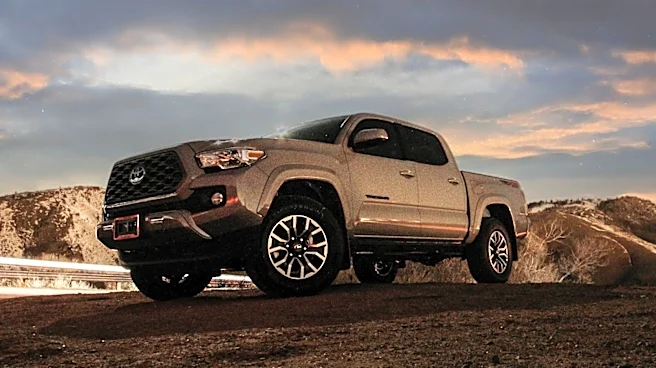
of Toyota Tacoma trucks. This expansion is expected to create 2,000 new jobs by 2030 and will add 2.5 million square feet to the existing facility, effectively doubling its size. The move will also involve phasing out Tacoma production at Toyota's Tijuana, Mexico plant, with operations shifting to San Antonio over the next four years. The expansion has been praised by state and local leaders, including Texas Governor Greg Abbott and San Antonio Mayor Gina Ortiz Jones, who highlighted the economic benefits and job creation potential for the region.
Why It's Important?
This investment underscores Toyota's commitment to American manufacturing and its confidence in the U.S. workforce. By relocating Tacoma production from Mexico to Texas, Toyota is not only expanding its manufacturing footprint but also enhancing its capacity to meet growing demand for its vehicles in the U.S. market. The creation of 2,000 jobs will have a significant positive impact on the local economy, providing new employment opportunities and supporting economic growth in San Antonio. Additionally, the expansion aligns with broader trends in the automotive industry, where manufacturers are increasingly investing in domestic production to mitigate risks associated with international trade and supply chain disruptions.
What's Next?
As Toyota transitions Tacoma production to San Antonio, the company will continue to maintain its operations in Mexico, albeit with a reduced focus on Tacoma trucks. The expansion is part of Toyota's broader strategy to invest up to $10 billion more in the U.S. by 2030, reflecting its long-term growth plans in the region. The increased production capacity at the San Antonio plant will enable Toyota to better compete in the U.S. market, particularly against rivals like General Motors, as it seeks to become the leading automaker in U.S. sales. The move also positions Toyota to capitalize on the growing popularity of hybrid vehicles, a segment where it has been a leader.