








What's Happening?
FC Barcelona has announced the issuance of new bonds totaling €300 million to finalize the renovation of its stadium, Camp Nou. This financial maneuver was managed by Goldman Sachs and received approval from both Spanish financial regulators and the club’s
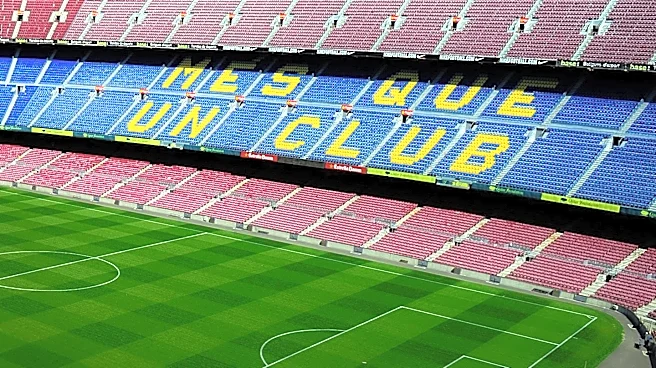
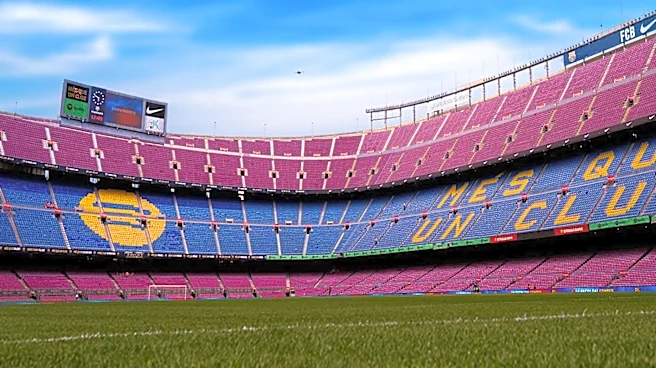
voting members. This latest funding adds to the €1.5 billion already borrowed for the project. The club's board, led by president Joan Laporta, had previously secured approval in September for borrowing €510 million. Of that amount, €210 million was allocated for daily operational needs, with the remaining €300 million from this new bond issuance specifically earmarked for stadium completion. Currently, the first and second tiers of seating at Camp Nou are finished, and workers are focused on completing new VIP boxes and the third tier by the end of the current season. Following this, the new stadium roof will be installed, necessitating a temporary relocation of the team to the Olympic Stadium in Montjuïc. The club anticipates a full return to a completely finished Camp Nou by January or February 2028, midway through the 2027-28 season.
Why It's Important?
This significant financial injection is crucial for FC Barcelona to complete its ambitious Camp Nou renovation project, which is vital for the club's long-term financial health and global standing. The modernized stadium is expected to generate increased revenue through enhanced fan experiences, premium seating, and expanded commercial opportunities, thereby strengthening the club's economic stability. The successful issuance of these bonds also reflects investor confidence in FC Barcelona's financial strategy and the projected returns from the stadium project. Delays or incomplete renovations could negatively impact the club's revenue streams and brand image. Furthermore, the completed stadium is slated to host major international events, including the men’s UEFA Champions League final in 2029, potentially the women’s edition in 2031, and the FIFA World Cup final in 2030. These events will bring substantial economic benefits to Barcelona and Spain, boosting tourism and international visibility.
What's Next?
Following the current season, FC Barcelona will temporarily relocate its home games to the Olympic Stadium in Montjuïc to allow for the construction of the new stadium roof. This temporary move is expected to last until the full completion of Camp Nou, projected for January or February 2028. During this period, the club will need to manage logistics for fans and ensure a smooth transition for team operations. The focus will remain on adhering to the construction timeline and budget to avoid further delays or cost overruns. Once completed, the club will begin preparations to host major international football events, including the 2029 UEFA Champions League final, with aspirations to host the 2031 Women's Champions League final and the 2030 FIFA World Cup final. These events will require extensive planning and coordination with UEFA, FIFA, and local authorities to ensure successful execution and maximize the economic and reputational benefits for the club and the city.
Beyond the Headlines
The extensive renovation of Camp Nou, funded by substantial bond issuances, highlights a broader trend in global sports where major clubs are investing heavily in state-of-the-art facilities to remain competitive both on and off the field. This strategy is not merely about upgrading infrastructure but also about creating multi-functional venues that can generate revenue beyond match days, through events, hospitality, and commercial partnerships. The financial model, relying on significant debt financing, underscores the high stakes involved in modern football club management, where success on the pitch is increasingly intertwined with robust business operations and strategic asset development. The project also reflects the evolving expectations of sports fans, who demand more than just a game, seeking immersive experiences, modern amenities, and technological integration. The long-term success of this venture will serve as a case study for other clubs considering similar large-scale stadium developments, particularly in balancing financial risk with potential rewards and community impact.