







What's Happening?
Nirva, a startup founded by former Meta Reality Labs employees Wei Lyu and Jason Chen, along with Hanying Hu, has raised a total of $33 million. This includes a recent $25 million pre-Series A round, adding to an earlier $8 million. The company is developing
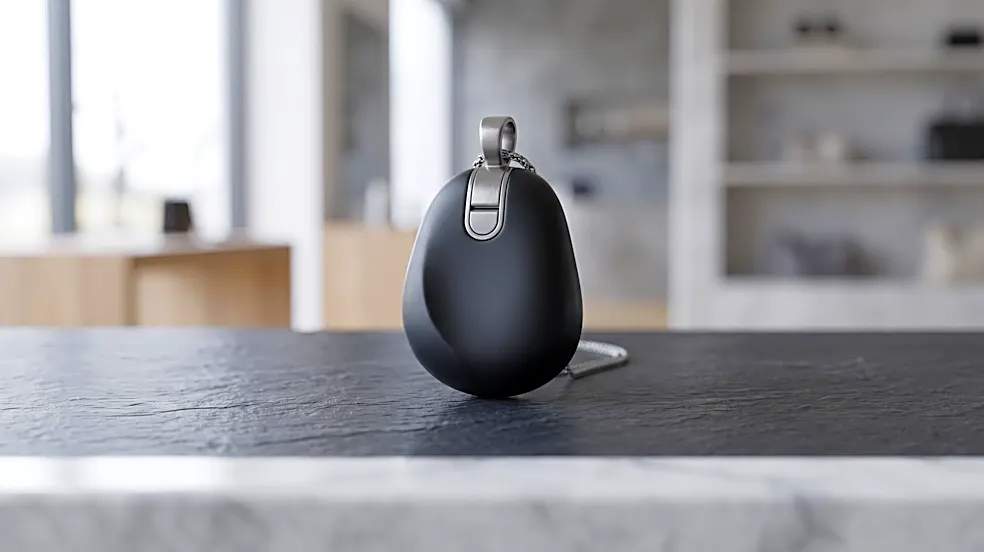
a jewelry-like pendant that functions as an AI wearable, designed to listen exclusively to the wearer's speech. The device, which can be worn as a pendant or bracelet, weighs approximately eight grams and boasts a battery life of up to three days. Nirva aims to blend fashion with utility, positioning its device as a tool for personal insights rather than a productivity gadget. It achieves privacy by filtering out other conversations and data, only recording the wearer, and by default, does not retain audio data or transcripts after processing. The device will be available for pre-order in November at $249, with shipments expected by the end of the year.
Why It's Important?
This development signifies a growing trend in the AI wearables market, emphasizing personalized and privacy-focused technology. Nirva's approach to only listening to the wearer addresses significant privacy concerns that have plagued other ambient AI devices, potentially increasing user adoption in a sensitive sector. By focusing on self-understanding, self-compassion, and self-awareness through speech analysis, Nirva is tapping into a market for personal development tools that leverage AI. The substantial funding indicates investor confidence in this niche, suggesting a potential shift in how consumers interact with AI—moving from broad data collection to highly individualized and secure personal assistants. The entry of such devices could influence the future of personal technology, making AI more integrated into daily life in a less intrusive manner.
What's Next?
Nirva plans to begin taking orders for its pendant in November, with initial shipments scheduled for early users by the end of the year. The company intends to release more devices in the long term, indicating a broader vision for its AI wearable ecosystem. The success of Nirva's initial product will likely influence further investment and development in the personalized AI wearable space. Competitors such as Taya, Friend, and Bee are also developing similar companion gadgets, suggesting an emerging competitive landscape. Future developments will likely focus on expanding the device's capabilities, refining its AI models for deeper insights, and potentially integrating with other personal health or wellness platforms, all while maintaining its core privacy-centric approach.
Beyond the Headlines
The emergence of devices like Nirva's pendant highlights a deeper societal shift towards integrating technology seamlessly into personal aesthetics and daily routines, blurring the lines between fashion and function. The emphasis on 'listening only to you' reflects a growing consumer demand for privacy and control over personal data in an increasingly connected world. This trend could lead to a re-evaluation of ethical guidelines for AI development, particularly concerning passive listening devices and data processing. Furthermore, by positioning itself as a personal insights company, Nirva touches upon the psychological and emotional dimensions of technology, suggesting a future where AI assists not just with tasks, but with self-reflection and emotional intelligence, potentially altering how individuals perceive and manage their inner lives.