




What's Happening?
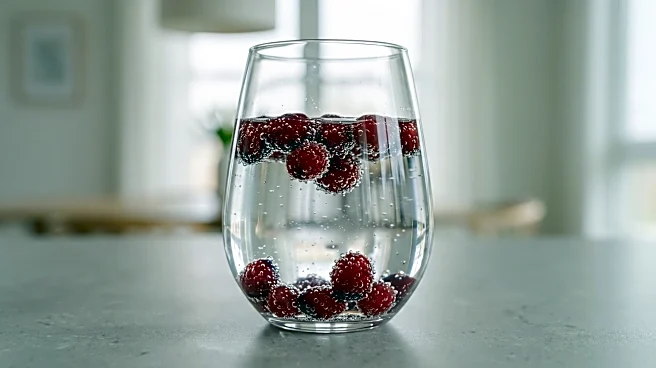
CBS News Pittsburgh's 'Hey Ray' segment suggests a fun and educational science experiment for Thanksgiving using dried cranberries, also known as craisins, and sparkling water or clear soda (referred to as 'pop'). The experiment involves placing dried cranberries into
a glass filled with the carbonated beverage. Initially, the cranberries sink to the bottom, then float to the top, and subsequently sink again, repeating the process. This 'Thanksgiving magic in a glass' is explained by the interaction between the cranberries and the carbon dioxide (CO2) dissolved in the drink. As CO2 bubbles attach to the surface of the cranberries, their buoyancy increases, causing them to rise. Upon reaching the surface, the bubbles pop, releasing the CO2 and causing the cranberries to sink back down, where the process restarts as more bubbles attach.
Why It's Important?
This simple experiment offers a practical and engaging way for families in the U.S. to explore basic scientific principles, such as buoyancy and gas solubility, during a holiday often focused on food and festivities. It transforms a common Thanksgiving item into a tool for learning, making science accessible and enjoyable for children and adults alike. By observing the cranberries' movement, participants can visually grasp concepts like density, the properties of gases, and how surface tension affects buoyancy. This hands-on activity encourages curiosity and critical thinking, fostering an early interest in STEM fields. It also provides a unique opportunity for intergenerational learning and interaction, turning mealtime into an educational experience that extends beyond the culinary arts.
What's Next?
This experiment can be easily replicated and adapted for various educational settings, from home kitchens to classrooms. Educators might incorporate similar food-based science activities to make learning more relatable and fun. Parents and guardians can use this as a starting point for further discussions about other scientific phenomena observed in everyday life. The success of such a simple, engaging experiment could inspire more initiatives that integrate science education into cultural events and holidays, making learning a continuous and enjoyable process. It also highlights the potential for media outlets to provide educational content that is both entertaining and informative, reaching a broad audience with scientific concepts.
Beyond the Headlines
The 'cranberry experiment' taps into a broader educational philosophy that emphasizes experiential learning and making science tangible. By demonstrating abstract concepts like buoyancy and gas dynamics with familiar objects, it helps demystify science and makes it less intimidating. This approach can be particularly effective in combating science anxiety and promoting scientific literacy from a young age. Furthermore, the experiment subtly encourages observation skills and the formulation of hypotheses, which are foundational to scientific inquiry. It also underscores the idea that science is not confined to laboratories but is an integral part of the world around us, even in a Thanksgiving meal. This kind of informal science education can have a lasting impact on how individuals perceive and engage with scientific information throughout their lives.