




What's Happening?
Shenzhen's Huaqiangbei, a prominent electronics hub, is attracting a new global audience in anticipation of the upcoming Asia-Pacific Economic Cooperation (APEC) summit. The city is set to host the annual summit, themed "Building an Asia-Pacific Community
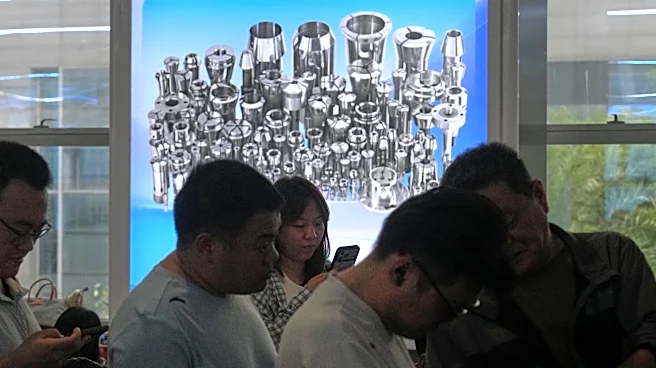
to Prosper Together," with China emphasizing openness, innovation, and cooperation as key priorities. Huaqiangbei, one of the world's largest wholesale markets for electronic products, showcases how these priorities are translating into commercial reality. The market, historically known for bulk electronic components, has shifted its focus to smart consumer goods, reflecting Shenzhen's drive for digital innovation. This transformation is supported by a tightly integrated industrial cluster that enables rapid product development and market entry. The area, spanning 1.45 square kilometers, houses 35 specialized markets and over 115,000 registered businesses, offering more than a million types of parts and finished goods. This ecosystem allows designers, suppliers, prototyping workshops, and exporters to collaborate closely, accelerating the journey from concept to market.
Why It's Important?
The evolution of Huaqiangbei into a hub for smart consumer goods and AI-enabled accessories highlights a significant shift in global electronics manufacturing and trade. The market's ability to quickly roll out new items, driven by its integrated industrial cluster, offers a model for efficient supply chains and rapid innovation. This development is particularly relevant for U.S. businesses and consumers, as a substantial portion of Huaqiangbei's overseas orders, ranging from 70% to 80%, originate from regions including the United States. The availability of affordable and advanced AI products, as noted by a South Korean journalist, indicates a potential for increased competition and innovation in the global tech market. Furthermore, China's visa waiver and tax refund policies are facilitating easier cross-border trade for individual shoppers, potentially increasing the flow of goods and influencing consumer markets worldwide, including the U.S. The growth in trade between Shenzhen and other APEC members, which rose 33% year-on-year in the first half of 2026, underscores the economic significance of this region.
What's Next?
The upcoming APEC summit in Shenzhen is expected to further spotlight the city's role as a global innovation and trade center. The discussions at the summit, focusing on openness, innovation, and cooperation, could lead to new policies and agreements that impact international trade and digital economy development. The continued growth of AI-related products in Huaqiangbei, with sales rising over 55% in the first seven months of 2026, suggests a sustained trend towards advanced technology integration in consumer goods. This trend will likely influence product development and market strategies for electronics companies globally. The increasing number of overseas visitors, including business travelers and tourists combining shopping with travel, indicates a growing international interest in Shenzhen's electronics market. This could lead to more direct engagement between international buyers and Chinese manufacturers, potentially streamlining supply chains and fostering new business partnerships.
Beyond the Headlines
The transformation of Huaqiangbei from a market for bulk electronic components to a hub for smart consumer goods reflects a broader shift in global manufacturing towards high-tech and innovative products. This evolution has implications for intellectual property rights and fair competition, as rapid product development and market entry can challenge existing regulatory frameworks. The ubiquity of affordable AI-enabled accessories in Shenzhen, which are not yet widely available in other markets like South Korea, raises questions about technological diffusion and market access. This disparity could influence consumer expectations and drive demand for similar products in other countries. The integrated industrial cluster in Huaqiangbei, which allows for swift movement from concept to market, represents a powerful economic model that could be studied and potentially replicated in other regions seeking to foster innovation and manufacturing efficiency. The increasing international engagement with this market also highlights the cultural and economic impact of globalized trade on local economies and consumer behavior.