







What's Happening?
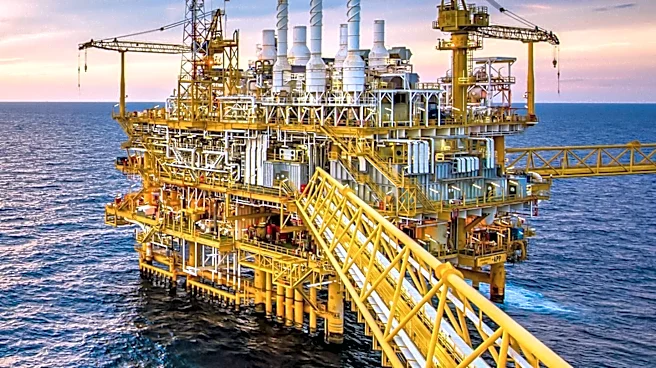
U.S. Transportation Secretary Sean Duffy announced the approval of the Blue Marlin deep-water crude oil export facility, to be located approximately 99 miles off Cameron Parish, Louisiana. This project, approved on November 5, will have the capacity to export up
to 2 million barrels of crude oil per day, or 80,000 barrels per hour. It marks the second deepwater crude export facility approved since President Trump's executive order on unleashing American energy and the fourth deep-water port authorization by the Trump administration. The facility will utilize a combination of existing and converted offshore platform infrastructure, with crude oil delivered via a dedicated pipeline network connecting major inland supply hubs in Texas and southwest Louisiana. The project is projected to create up to 1,052 construction jobs and enhance the nation's capability to accommodate very large crude carriers (VLCCs) directly offshore in deep water.
Why It's Important?
The approval of the Blue Marlin facility is a significant development for the U.S. energy sector, aiming to bolster crude oil export capabilities and strengthen energy supply lines. By enabling VLCCs to load directly offshore, the project is expected to alleviate congestion at inland ports, reduce the risk of vessel collisions, and improve the overall efficiency of U.S. crude exports. This expansion of export infrastructure supports the Trump administration's goal of 'unleashing American energy' and is intended to enhance the energy security of U.S. allies. The creation of over a thousand construction jobs also provides an economic boost to the region. This move underscores a strategic effort to solidify the U.S. position as a major global energy exporter, with potential implications for international energy markets and geopolitical dynamics. The project's review by the Maritime Administration and Coast Guard, alongside state agencies, confirms its adherence to federal safety and security standards.
What's Next?
With federal approval secured, the Blue Marlin deep-water crude oil export facility will proceed with its development and construction phases. The project is expected to generate up to 1,052 construction jobs, contributing to local and regional economies. The focus will now shift to the operational readiness of the facility, ensuring it can meet its projected export capacity of up to 2 million barrels of crude oil per day. Continued monitoring of the facility's environmental impact and adherence to safety regulations will be crucial. The success of this project could pave the way for further investments in deep-water port infrastructure, reinforcing the U.S.'s long-term strategy for energy independence and global energy supply. The facility's integration with existing pipeline networks will also be a key aspect of its ongoing development.
Beyond the Headlines
The approval of the Blue Marlin facility highlights the ongoing tension between economic development, energy security, and environmental concerns. While the project promises job creation and enhanced export capabilities, it also raises questions about the long-term environmental impact of increased crude oil extraction and transportation. The emphasis on 'unleashing American energy' reflects a broader policy direction that prioritizes fossil fuel production, potentially conflicting with global efforts to transition to renewable energy sources. This development could also influence international trade relations, as increased U.S. crude oil exports may alter global supply and demand dynamics. The use of existing and converted offshore infrastructure suggests a pragmatic approach to expansion, but the long-term sustainability and safety of such large-scale operations in deep-water environments will remain a critical area of public and regulatory scrutiny.