





What's Happening?
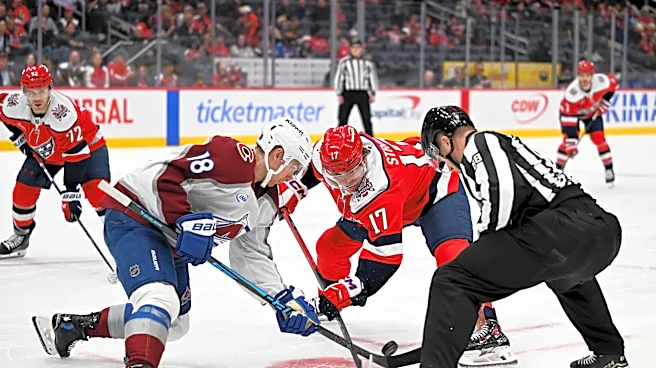
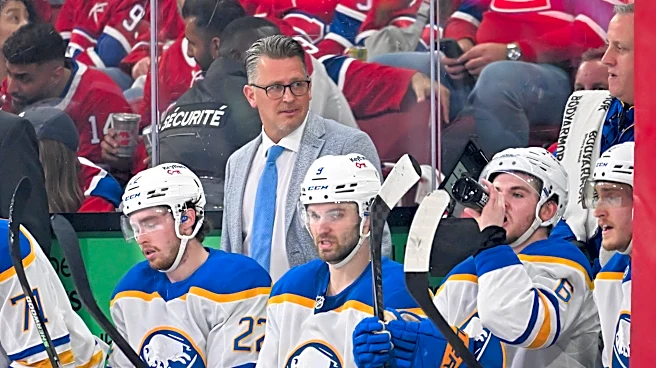
The Buffalo Sabres are navigating a challenging 2026-27 NHL season, marked by sub-par performance despite a recent win against the Washington Capitals that broke a five-game losing streak. General Manager Jarmo Kekalainen is tasked with crucial contract
negotiations for several key players. Goaltenders Alex Lyon and Colten Ellis, along with veteran winger Jason Zucker, are slated to become unrestricted free agents. More pressingly, Kekalainen must address the restricted free-agent status of young forwards Jack Quinn and Jiri Kulich. Quinn, 25, is having a breakout season with 11 goals and 22 points in 22 games, positioning him for a significant raise. Kulich, 22, is in the final year of his entry-level contract, but his development has been slower due to injury issues, impacting his bargaining power. The Sabres currently have $24.2 million in projected cap space, providing flexibility, but Kekalainen must balance player investments with future free-agency and trade market needs.
Why It's Important?
These contract negotiations are critical for the Buffalo Sabres' long-term competitiveness and financial stability. Securing Jack Quinn to a long-term, team-friendly deal could provide significant value in future seasons, capitalizing on his current strong performance. Conversely, mismanaging Kulich's contract could either undervalue a potential future asset or commit too much to a player whose development has stalled. The decisions made now will impact the team's ability to attract and retain talent, manage its salary cap effectively, and build a roster capable of contending for the Stanley Cup playoffs. How Kekalainen handles these situations will be a key measure of his effectiveness as GM, directly influencing the team's financial health and on-ice performance for years to come. The outcome will also signal the organization's commitment to its young core players.
What's Next?
Sabres GM Jarmo Kekalainen will need to determine the appropriate contract lengths and financial terms for Jack Quinn and Jiri Kulich. For Quinn, the decision will involve whether to pursue a short-term deal to maintain team control or a long-term extension that locks in a potentially valuable asset at a favorable annual salary. For Kulich, Kekalainen must assess his future role with the team, considering his slower development and potential assignment to the American League, which would further reduce his bargaining power. Simultaneously, the team will need to evaluate its plans for unrestricted free agents Alex Lyon, Colten Ellis, and Jason Zucker. These negotiations will unfold against the backdrop of the ongoing season, with player performance continuing to influence their market value and the team's strategic priorities. The outcomes will shape the Sabres' roster composition and financial outlook for the upcoming seasons.
Beyond the Headlines
The contract situations of Quinn and Kulich highlight a common dilemma for NHL general managers: balancing immediate team needs with long-term player development and salary cap management. The differing trajectories of these two young players—Quinn's rapid ascent versus Kulich's slower progress—underscore the complexities of player valuation. A long-term deal for Quinn, if he continues his current performance, could become a significant bargain, demonstrating foresight. Conversely, a misstep with Kulich could either lead to overpaying for unfulfilled potential or losing a player who might develop elsewhere. These decisions reflect the broader organizational philosophy on player investment, risk assessment, and the cultivation of a winning culture. The outcomes will not only affect the Sabres' on-ice product but also set precedents for future contract negotiations with other young players, influencing team morale and player perceptions of the organization.