





What's Happening?
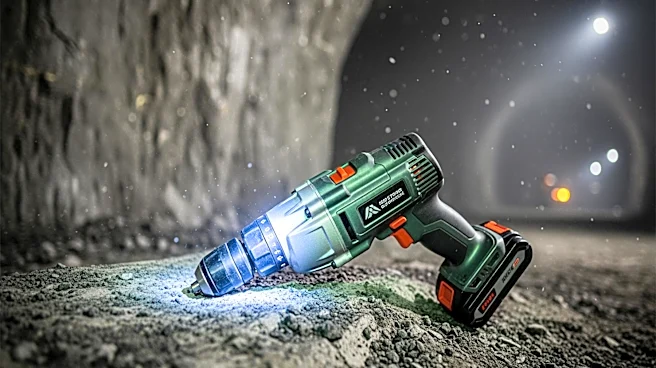
Sandvik has introduced the DD423iE, a battery-electric underground development drill, marking a significant advancement in mining technology. This new drill is built on the mechanical platform of its diesel predecessor, the DD423i, and is designed to
deliver high productivity with zero direct underground emissions. The DD423iE features a lithium iron phosphate (LFP) battery system, chosen for its thermal stability and extended cycle life, making it suitable for the confined and poorly ventilated environments typical of underground mining. The drill offers an 80% improvement in battery drilling performance, a 50% increase in battery capacity and tramming range, and a 30% faster tramming speed compared to its predecessor. These enhancements are expected to reduce ventilation costs and improve operational efficiency in deep underground mines.
Why It's Important?
The introduction of the DD423iE represents a pivotal shift towards sustainable mining practices. By eliminating diesel combustion, the drill reduces direct emissions and ventilation requirements, which are significant cost factors in underground mining. This transition to battery-electric technology aligns with global decarbonization efforts and supports mining companies' environmental, social, and governance (ESG) commitments. The operational cost savings from reduced ventilation and fuel expenses, combined with the drill's improved performance metrics, present a compelling financial case for its adoption. This development is likely to accelerate the broader electrification of mining fleets, setting a precedent for future innovations in the industry.
What's Next?
As the DD423iE gains traction, mining companies are expected to evaluate their fleet strategies, considering the long-term cost benefits and environmental advantages of battery-electric equipment. The successful field validation of the drill at Agnico Eagle Finland's Kittilä mine provides empirical evidence of its capabilities, which could influence procurement decisions across the industry. Additionally, the integration of automation technologies with the DD423iE may further enhance its appeal, offering increased operational efficiency and safety. The mining sector may see a gradual shift towards electrification, with development drills serving as the entry point for broader fleet transitions.
Beyond the Headlines
The adoption of battery-electric drills like the DD423iE could have far-reaching implications beyond immediate operational benefits. It may drive innovation in underground electrical infrastructure, as mines will need to adapt to new power distribution requirements. This shift could also influence regulatory standards, as reduced emissions and improved safety profiles become more prevalent. Furthermore, the success of such technologies may encourage investment in renewable energy sources to power mining operations, contributing to a more sustainable industry overall.