



What's Happening?
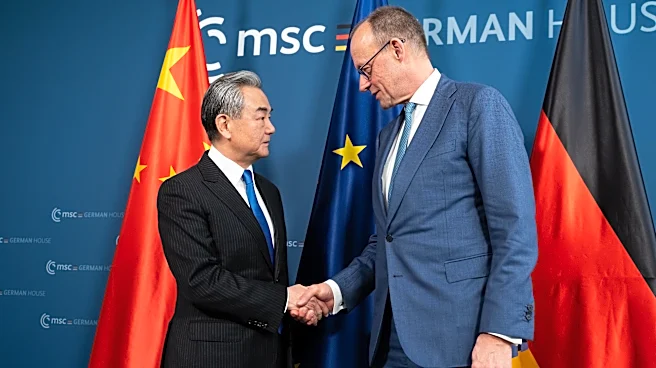
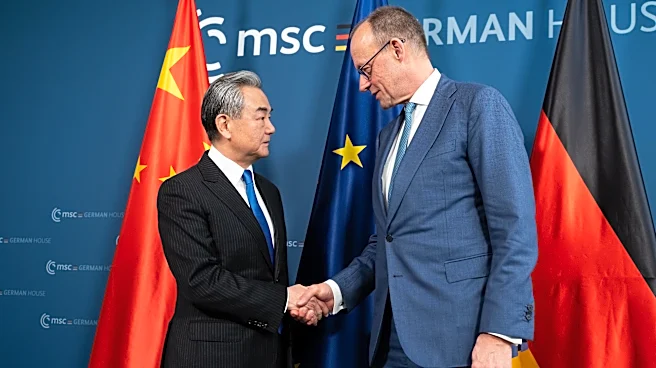
In October, European Union Trade Commissioner Maroš Šefčovič and Chinese Commerce Minister Wang Wentao held two days of discussions in Beijing, culminating in a 'shared understanding.' These talks addressed the significant trade imbalance between the EU
and China, with a particular focus on whether the EU's record trade deficit is a consequence of Chinese overcapacity or a reflection of Europe's own competitiveness and energy sector challenges. The dialogue also encompassed the environment for European companies operating in China and the nature of Chinese investment in Europe. This engagement represents an ongoing effort to navigate complex economic relations and seek common ground on contentious trade issues.
Why It's Important?
The ongoing dialogue between the EU and China, particularly concerning trade imbalances and competitiveness, holds significant implications for the U.S. and the global economy. A resolution or escalation of these trade tensions could directly affect international markets, supply chains, and investment flows, impacting U.S. businesses and consumers. The debate over 'Chinese overcapacity' versus 'European competitiveness' highlights fundamental economic policy differences that could influence future trade agreements and multilateral economic frameworks. For U.S. industries, understanding these dynamics is crucial for strategic planning, especially for those with significant exposure to either the European or Chinese markets, or both.
What's Next?
The 'shared understanding' reached in October is expected to pave the way for further discussions and potential policy adjustments. Future talks will likely delve deeper into the specifics of addressing the trade deficit, market access for European firms in China, and the broader implications of Chinese investment in Europe. The outcomes of these ongoing negotiations will be closely watched by international trade organizations, governments, and businesses, as they could set precedents for how major economic powers manage complex trade relationships and address issues of industrial policy and market fairness.
Beyond the Headlines
The discussions between the EU and China extend beyond immediate trade figures, touching upon deeper philosophical and practical differences in economic models. The question of 'overcapacity' versus 'competitiveness' reflects a fundamental tension between state-led industrial development and market-driven economies. This dynamic has profound implications for global economic governance, intellectual property rights, and the future of multilateral trade. The way these issues are resolved could redefine international trade norms, potentially leading to new forms of economic cooperation or, conversely, increased fragmentation and protectionism, with long-term consequences for global stability and prosperity.