







What's Happening?
Dr. Trisha Pasricha, a gastroenterologist and director of the Institute for Gut-Brain Research at Beth Israel Deaconness, advocates for psyllium husk as the most effective fiber supplement for individuals unable to meet their daily fiber intake through
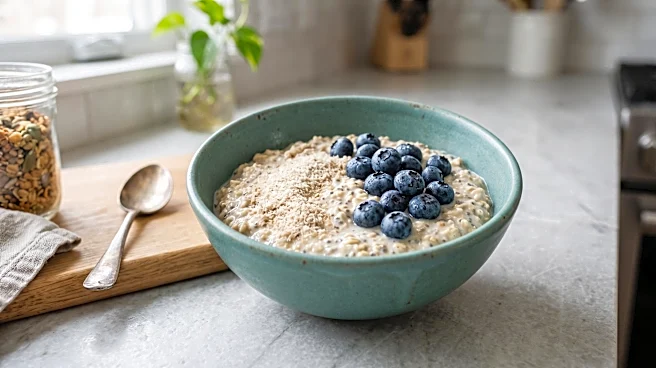
diet alone. While emphasizing a 'food-first' approach, Dr. Pasricha notes that psyllium husk is one of the few supplements with strong supporting data. Psyllium husks are plant-based and primarily composed of soluble fiber, which forms a gel-like substance in the gastrointestinal tract when it absorbs water. This action helps to bulk and soften stool, facilitating its movement through the body. The recommended daily fiber intake for most adults ranges from 25 to 38 grams, a target many find challenging to achieve consistently. Dr. Pasricha herself incorporates psyllium husk into her daily routine, often mixing it into her coffee or overnight oats.
Why It's Important?
The recommendation of psyllium husk by a leading gastroenterologist highlights the critical role of fiber in maintaining gut health and overall well-being. Adequate fiber intake is essential for digestive regularity, blood sugar stabilization, and cholesterol management. Psyllium husk's ability to slow digestion helps in stabilizing blood sugar levels, which is beneficial for individuals managing diabetes or seeking to prevent blood sugar spikes. Furthermore, its capacity to bind to bile aids in reducing the body's absorption of cholesterol, contributing to cardiovascular health. This expert endorsement could influence consumer choices in the growing supplement market, steering them towards a product with robust scientific backing. For individuals struggling with digestive issues like constipation or irregular bowel movements, psyllium husk offers a well-supported dietary intervention that can significantly improve quality of life.
What's Next?
Individuals considering psyllium husk supplements are advised to consult their doctor or pharmacist, especially if they are pregnant or have pre-existing health conditions. When starting psyllium husk, it is crucial to begin with a low dose and gradually increase it to avoid digestive upset, such as bloating or gas. Adhering to the directions on the supplement label is essential. Additionally, maintaining adequate hydration by drinking plenty of water, at least one full glass (240 milliliters) with each dose, is vital for the supplement to work effectively and prevent potential blockages. The continued emphasis on fiber intake by medical professionals suggests a sustained focus on dietary interventions for gut health, potentially leading to more widespread adoption of fiber supplements like psyllium husk among the general population.
Beyond the Headlines
The strong recommendation for psyllium husk underscores a broader trend in healthcare towards evidence-based nutritional interventions. In a market saturated with various supplements, expert endorsements based on scientific data provide much-needed clarity and credibility for consumers. This focus on specific, well-researched ingredients like psyllium husk could also encourage more rigorous scientific scrutiny of other dietary supplements. Ethically, promoting supplements with strong evidence helps combat misinformation and ensures that individuals invest in products that are genuinely beneficial. Culturally, there's a growing awareness of the importance of gut health, moving it from a niche concern to a mainstream health priority, driven by both scientific discoveries and public education efforts from experts like Dr. Pasricha.