
What's Happening?
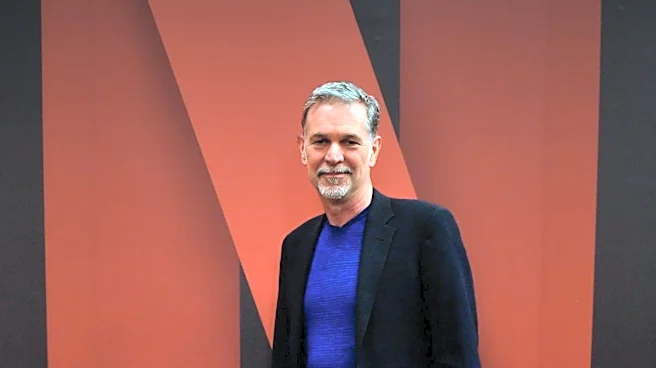
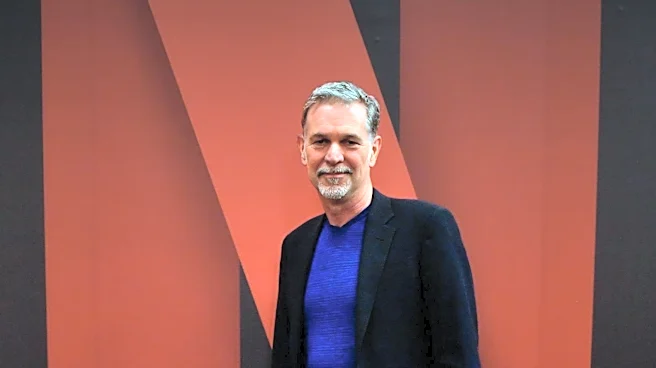
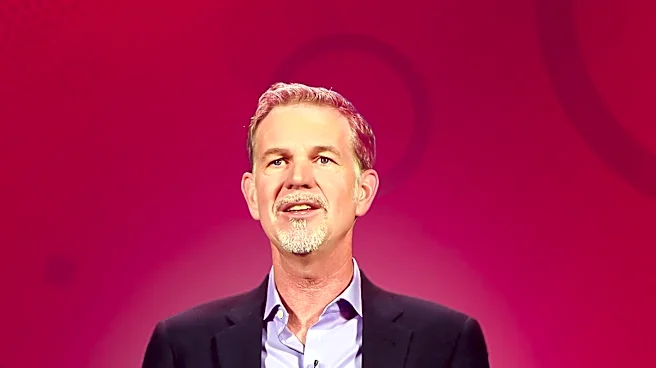
Reed Hastings, co-founder of Netflix, has cultivated a corporate culture centered on freedom, accountability, and high performance, as detailed in his book 'No Rules Rules,' co-authored with Erin Meyer.
This management philosophy, which Hastings systematized, aims to foster an environment that values creativity, proactivity, and strong performance. A key tenet is 'talent density,' advocating for a team composed of highly exceptional individuals rather than a large, inconsistently skilled workforce. Netflix prioritizes performance, contribution, and suitability for a role over seniority or loyalty. The company employs a 'Keeper Test' for managers, asking if they would fight to retain an employee if they resigned; a 'no' suggests considering a replacement. This approach also leads Netflix to offer competitive salaries to attract and retain top talent, believing a small, exceptional team is more effective than a larger, less uniform one. The company encourages direct feedback among employees and leaders, even if unconventional, provided it is given in good faith and aims to improve overall performance. Transparency is also emphasized, with employees encouraged to share mistakes for collective learning.
Why It's Important?
This leadership philosophy has significant implications for U.S. businesses and management practices. By prioritizing 'freedom and responsibility' over rigid controls, Netflix challenges traditional corporate structures that often rely on extensive policies and approval layers. This model suggests that empowering employees with comprehensive information about the company's goals and challenges, rather than issuing directives, can lead to more proactive and effective decision-making. For U.S. industries, this could mean a shift towards flatter organizational hierarchies and increased employee autonomy, potentially boosting innovation and adaptability in fast-paced sectors. Companies adopting similar approaches might see improved employee engagement and retention, as individuals are given more ownership over their work. However, this model also demands a high level of trust and a robust hiring process to ensure employees are competent and responsible. Businesses that fail to cultivate a strong talent pool might find this approach counterproductive, highlighting the importance of strategic recruitment and continuous performance evaluation.
What's Next?
The continued success of Netflix under this 'no rules' philosophy could inspire more U.S. companies to re-evaluate their own management structures and employee empowerment strategies. As the business landscape evolves, particularly with the rise of remote work and the demand for agile operations, the principles of freedom and responsibility may become increasingly relevant. Companies might explore implementing similar feedback mechanisms and talent density strategies to enhance their competitive edge. The emphasis on transparency and learning from mistakes could also lead to more resilient organizational cultures. However, the adoption of such a model requires a significant cultural shift and investment in employee development and trust-building, which may not be feasible for all organizations. Future trends could see a hybrid approach, where elements of Netflix's philosophy are integrated into more traditional frameworks, tailored to specific industry needs and company sizes.
Beyond the Headlines
The 'no rules' philosophy at Netflix extends beyond mere operational efficiency; it delves into the ethical and cultural dimensions of corporate governance. By fostering an environment where employees are treated as responsible adults capable of making sound judgments, the company promotes a culture of respect and trust. This contrasts sharply with traditional command-and-control models that can stifle creativity and lead to employee disengagement. The emphasis on direct feedback, even if critical, encourages open communication and continuous improvement, potentially reducing internal politics and fostering a more meritocratic environment. However, this approach also places a significant burden on individual employees to consistently perform at a high level and to self-regulate, which might not be suitable for everyone. The long-term shift triggered by such models could be a redefinition of the employer-employee relationship, moving towards a partnership based on mutual accountability and shared objectives, rather than a hierarchical structure of supervision and compliance.