



What's Happening?
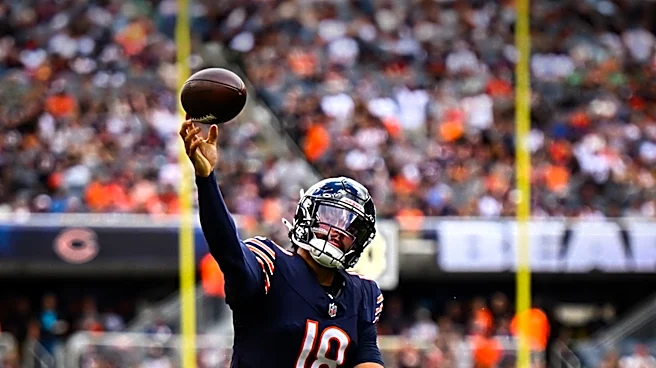
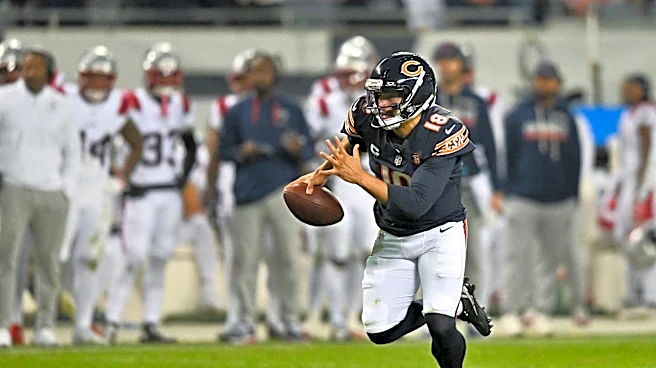
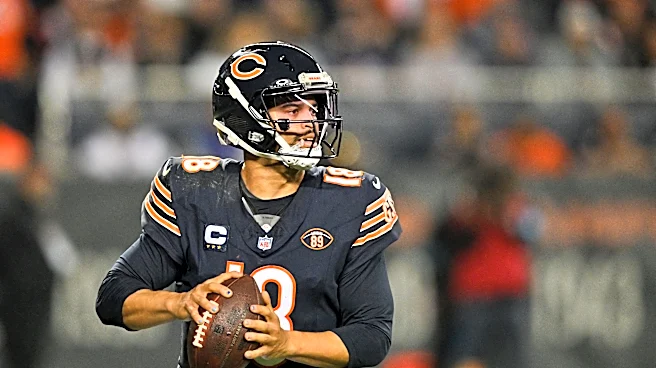
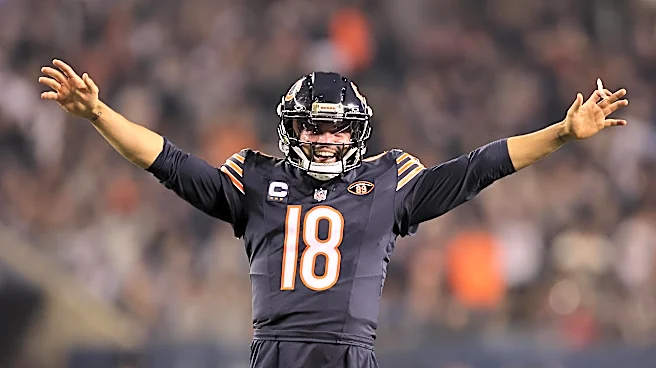
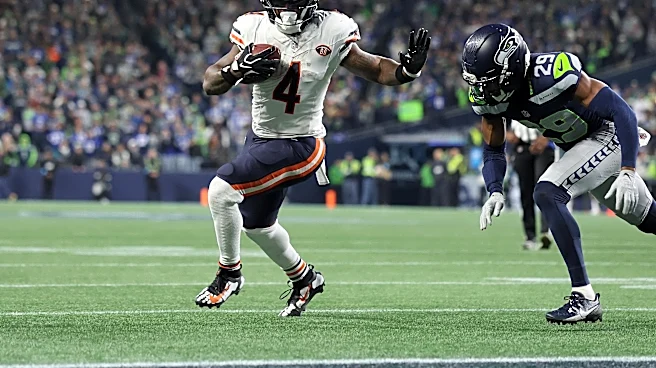
Chicago Bears quarterback Caleb Williams has resolved a growing controversy with the NFL by obscuring the unauthorized Caddix logo on his cleats. Williams had been wearing Caddix cleats, which violated the NFL's branding policy, leading to fines of $11,941
for a Week 6 game and $23,882 for a Week 7 game, totaling $35,823. The NFL's Rule 5, Section 4, Article 7 prohibits players from displaying commercial names or logos without prior league approval. Cincinnati Bengals backup quarterback Joe Flacco, an investor and 'athlete adviser' for Caddix, had publicly offered to pay Williams' fines, and Caddix even erected a billboard supporting Williams. Despite initially vowing to continue displaying the logo due to perceived health benefits from the shoes, Williams ultimately decided to black out the logo to 'calm things down' and avoid creating 'BS toward the team,' as media attention intensified.
Why It's Important?
This incident highlights the ongoing tension between individual player endorsements and the NFL's strict branding and uniform policies. The league and the NFL Players Association collectively benefit from licensed apparel partnerships, making unauthorized branding a direct challenge to their revenue streams and control over player appearance. For Caleb Williams, a burgeoning superstar, the controversy risked becoming a significant distraction for both him and the Bears, especially during a critical period of three prime-time games. His decision to comply underscores the power of the league's regulations and the potential for escalating fines and team penalties, including 5-yard penalties for uniform violations. The public support from Joe Flacco and Caddix also demonstrates how brands can leverage player controversies for significant publicity, even if the player ultimately conforms to league rules.
What's Next?
With Caleb Williams now obscuring the Caddix logo, the immediate controversy is expected to subside. This resolution prevents further fines for Williams and avoids potential team penalties during games. The NFL will likely continue to enforce its uniform policies rigorously, especially with high-profile players, to maintain control over its brand image and protect its official partnerships. For Caddix, despite Williams' compliance, the extensive media coverage generated by the controversy has provided significant, unpaid publicity. This event may lead other players and brands to re-evaluate their approach to endorsements and adherence to league rules, potentially influencing future negotiations between players, brands, and sports leagues regarding personal branding and commercial displays.
Beyond the Headlines
The Caleb Williams cleat controversy delves into deeper implications concerning player autonomy versus league control in professional sports. While players are increasingly seen as individual brands, leagues like the NFL maintain stringent rules to protect their collective brand and commercial interests. This incident showcases the delicate balance between allowing players personal expression and upholding contractual obligations that benefit the entire league. It also touches upon the ethical considerations of player health claims versus commercial promotion, as Williams initially cited health benefits for wearing the cleats. The extensive media attention and public debate surrounding the issue underscore the significant cultural and economic impact of sports, where even minor uniform details can spark widespread discussion and reveal underlying power dynamics within the industry.