






What's Happening?
Bitdeer has launched a Co-Mining model designed to separate energy infrastructure from mining hardware investment, addressing the rapid depreciation of mining machines. This model forms a partnership where site owners provide compliant sites, power capacity,
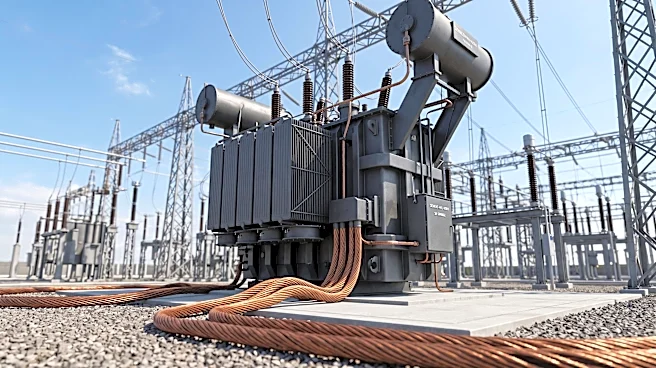
and grid connections, while Bitdeer supplies the miners and handles deployment. Crucially, site owners are not required to purchase the mining hardware. This approach allows site owners to allocate more capital towards long-term infrastructure, such as transformers, cooling systems, and power distribution equipment. Bitdeer reported significant growth in its Co-Mining operations, with 56,000 miners in June 2026 and a hash rate reaching 28.7 EH/s in September, up from 15.9 EH/s in June. The International Energy Agency projects a substantial increase in global data-center electricity consumption, highlighting the growing importance of dependable power and suitable sites for computing operations.
Why It's Important?
This Co-Mining model is significant for the U.S. energy and computing sectors as it offers a new pathway for entrepreneurs with underutilized land and power capacity to generate revenue without the high upfront costs and rapid depreciation associated with mining hardware. By focusing capital on durable infrastructure, site owners can build long-lasting assets that support regional development and strengthen the country's digital economy. The model also provides a potential bridge to future computing opportunities, such as AI and high-performance computing (HPC), as demonstrated by Sphere 3D's agreements with Bitdeer for sites in Tennessee and Kentucky. While Bitcoin ASIC miners cannot directly become AI GPUs, the underlying reliable power infrastructure and skilled workforce developed through Co-Mining are critical for supporting advanced computing needs. This initiative could foster innovation and economic growth in areas with abundant energy resources, transforming them into hubs for digital infrastructure.
What's Next?
The Co-Mining model is expected to expand further, with Bitdeer continuing to seek viable sites that meet specific power quality and electricity cost criteria, typically requiring at least 15 MW for air-cooled or 5 MW for hydro-cooled installations. The success of these partnerships will depend on factors such as power prices, Bitcoin prices, network difficulty, and uptime, as net profits are shared based on an agreed ratio after costs. The long-term implications include the potential for upgraded infrastructure and a trained local workforce to remain in communities, supporting future digital infrastructure needs beyond Bitcoin mining. Companies like Sphere 3D are already assessing the potential for AI and HPC uses at Co-Mining sites, indicating a broader application of this model in the evolving computing landscape. This could lead to increased investment in energy infrastructure and specialized training programs in regions adopting this model.
Beyond the Headlines
The Bitdeer Co-Mining model represents a strategic shift in how energy assets are leveraged for digital value creation, moving beyond traditional mining operations. It highlights an ethical consideration regarding resource allocation, as it encourages investment in long-term, sustainable infrastructure rather than rapidly depreciating hardware. This approach could mitigate some of the environmental concerns associated with cryptocurrency mining by promoting efficient use of existing energy resources and potentially integrating with renewable energy sources. Furthermore, the model's emphasis on developing a skilled local workforce and upgrading regional infrastructure could address economic disparities by bringing high-tech jobs and advanced capabilities to areas that might otherwise be overlooked. This could foster a more resilient and distributed digital economy, reducing reliance on centralized computing hubs and enhancing national digital security.