




What's Happening?
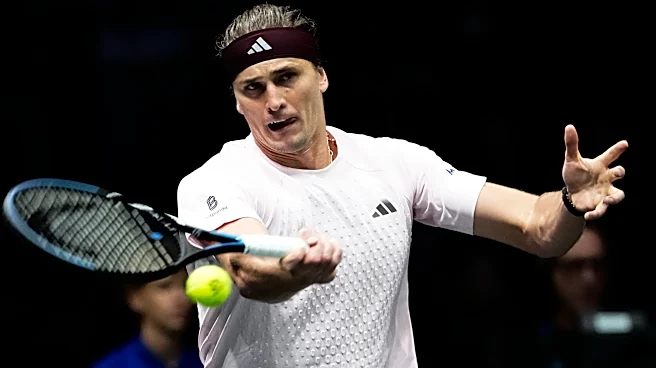
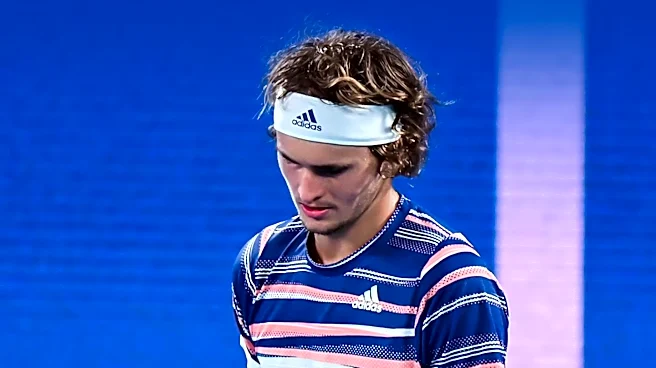
Boris Becker, a former World No. 1 in tennis, has publicly stated that he would not consider coaching fellow German tennis star Alexander Zverev. Becker cited issues with Zverev's established coaching team, particularly the involvement of family members
who he claims have differing opinions in a language he doesn't understand, specifically Russian. Becker emphasized his need to be the 'boss in the ring' as a coach, a condition he believes would not be met with Zverev's current setup, which often includes his father, Alexander Zverev Sr., and brother, Mischa Zverev. Becker has previously coached Novak Djokovic to six Major titles and had a brief stint with Holger Rune. His coaching philosophy involves giving blunt assessments, which he believes is crucial for player development, but acknowledges this approach can sometimes lead to partnership breakdowns.
Why It's Important?
This development highlights the complexities of coaching relationships in professional tennis, particularly when family members are deeply involved in a player's career. Becker's comments underscore the importance of a clear hierarchy and unified vision within a coaching team for optimal performance. For Zverev, who has had several high-profile coaches like Juan Carlos Ferrero and Ivan Lendl whose tenures were short-lived due to clashes with his existing team, Becker's stance reinforces a recurring challenge in his career. The inability to integrate external coaching expertise effectively could hinder Zverev's progress, especially as he aims to improve his record against top-10 opponents and solidify his position at the sport's elite level. This situation also reflects on the broader trend of players seeking strong, independent coaching voices versus maintaining established family-centric teams.
What's Next?
Following Becker's definitive statement, it is unlikely that a coaching partnership between him and Alexander Zverev will materialize in the near future. Zverev will likely continue with his current coaching setup, led by his father, as he prepares for upcoming tournaments, including the ATP Finals, where he aims to conclude the season strongly and improve his performance against top-ranked players. Becker, having expressed interest in returning to the ATP Tour as a coach, will likely explore other opportunities with players who align with his coaching philosophy and team structure requirements. The tennis world will observe how Zverev's performance evolves without a major external coaching figure and whether he can overcome his challenges against elite competition with his current team.
Beyond the Headlines
The dynamic between Alexander Zverev and Boris Becker extends beyond a simple coaching decision, touching upon national tennis identity and generational differences. As the only German male World No. 1s, a partnership could have held significant symbolic weight for German tennis. However, Becker's critique of Zverev's team dynamics and even his public popularity in Germany suggests deeper issues than just on-court strategy. This situation also brings to light the evolving role of coaches in modern tennis, where players often come with established entourages, making it challenging for new coaches to assert authority. The emphasis on family involvement versus professional external guidance remains a persistent debate in sports, with this instance serving as a prominent example of the potential friction points.