






What's Happening?
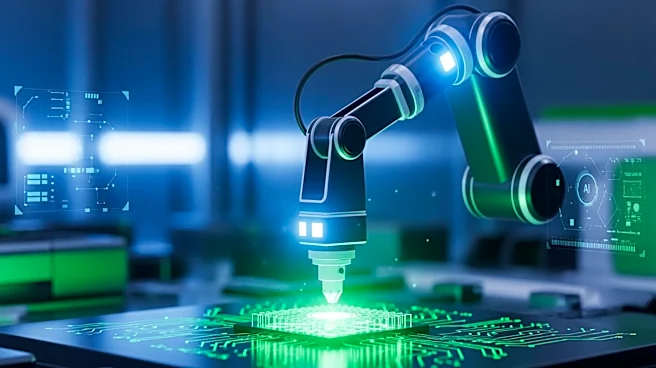
FORT Robotics and NVIDIA have launched an AI-driven 'Outside-In Safety' blueprint designed to enhance the safety and productivity of autonomous robots. This new system utilizes external infrastructure sensors to extend robot perception beyond onboard
capabilities, allowing for real-time safety and operational efficiency. The initiative is part of FORT's collaboration with NVIDIA within the Halos AI Systems Inspection Lab, which focuses on ensuring functional safety and AI compliance for autonomous systems. The blueprint aims to improve worker safety and maximize return on investment by enabling robots to operate safely alongside humans in dynamic environments.
Why It's Important?
The introduction of the Outside-In Safety blueprint marks a significant advancement in the field of robotics, particularly in industries like warehousing and manufacturing. By leveraging external sensors, the system promises to enhance situational awareness and prevent accidents, addressing a critical challenge in mixed human-robot environments. This development could lead to increased adoption of autonomous systems, as it addresses safety concerns that have previously limited their deployment. The collaboration between FORT and NVIDIA highlights the growing importance of AI in creating safer and more efficient industrial operations.
What's Next?
FORT and NVIDIA plan to demonstrate the new safety system at the Automate conference in Chicago, potentially attracting interest from various industries. As the system is integrated into more operations, its effectiveness and impact on productivity and safety will be closely monitored. The success of this initiative could pave the way for broader implementation of AI-driven safety solutions in other sectors, further transforming the landscape of industrial automation.
Beyond the Headlines
The collaboration between FORT and NVIDIA underscores the evolving role of AI in enhancing safety and efficiency in industrial settings. This development raises important questions about the future of work and the integration of AI in human-centric environments. As these technologies become more prevalent, there will be ongoing discussions about their ethical implications and the need for regulatory frameworks to ensure their responsible use.