



What's Happening?
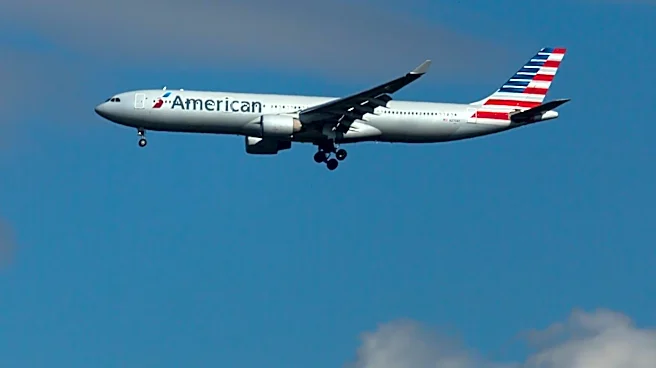
American Airlines, in collaboration with Infinium, has successfully completed its first commercial passenger flight using electro sustainable aviation fuel (eSAF). The flight, which departed from Corpus Christi International Airport and landed at Dallas
Fort Worth International Airport, marks a significant milestone in the aviation industry's efforts to decarbonize. The eSAF used was produced at Infinium's Pathfinder facility in Corpus Christi, Texas, the world's first commercial-scale power-to-liquids eFuels production site. This fuel was blended with conventional jet fuel and met the ASTM International specification for JetA, ensuring its compatibility with existing aircraft engines and fueling infrastructure. This event represents the first delivery of sustainable aviation fuel to a U.S. commercial airport without the use of biobased feedstocks, demonstrating the fuel's compatibility with current aviation supply chains.
Why It's Important?
The introduction of eSAF in commercial aviation is a crucial step towards reducing the industry's carbon footprint. Aviation is a significant consumer of jet fuel, with global consumption nearing 100 billion gallons annually. Despite the growing interest in sustainable aviation fuels, they currently account for less than 1% of total jet fuel use worldwide. The successful deployment of eSAF, which can reduce lifecycle greenhouse gas emissions by over 90% compared to conventional jet fuel, offers a practical solution for reducing emissions. This development not only supports environmental goals but also enhances energy security by diversifying the aviation fuel supply, contributing to a more resilient system. American Airlines' initiative, supported by partnerships with entities like Citi and Project Roadrunner, underscores the collaborative effort required to scale such innovations.
What's Next?
Looking ahead, the focus will be on scaling the production and use of eSAF. Infinium's Project Roadrunner, expected to begin production in 2027, aims to produce over 5 million gallons of eSAF annually. This project is backed by significant financial support from Breakthrough Energy Catalyst, Brookfield Asset Management, and HSBC. As production ramps up, the aviation industry will likely see increased adoption of sustainable fuels, driven by both regulatory pressures and corporate sustainability commitments. The success of this initial flight could encourage other airlines to explore similar initiatives, potentially leading to broader industry shifts towards low-carbon aviation solutions.