





What's Happening?
The commercial launch of the Superbird-9 satellite on a SpaceX Starship, contracted by SKY Perfect JSAT Corporation of Japan and built by Airbus Defence and Space, has experienced repeated delays. Initially targeting a 2024 launch when the deal was announced
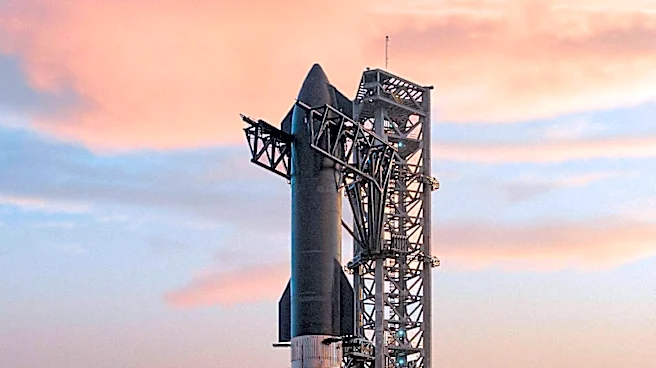
in August 2022, the date has continuously shifted, moving to no earlier than the first half of 2027 by August 2023, and then to a current placeholder of NET (No Earlier Than) 2028, with at least one source citing December 31, 2028. Aerospace journalist Eric Berger of Ars Technica recently challenged critics who claimed a 2027 launch was imminent, implying that a near-term 2027 launch is not confirmed. The Superbird-9 mission, a commercially significant High Throughput Satellite (HTS) for broadcast and broadband services over Japan and Eastern Asia, is manifested for Launch Complex 39A's Starship pad at Kennedy Space Center in Florida.
Why It's Important?
The repeated delays of the Superbird-9 launch are a significant indicator of Starship's broader commercial readiness timeline. While Starship completed its first successful full-stack flight profile in 2024, commercial payload certification for Geosynchronous Transfer Orbit (GTO) missions involves additional regulatory and technical hurdles beyond the vehicle's basic flight record. These delays highlight the complexities of bringing a novel, large-scale launch vehicle to full commercial operational status. For customers and the aerospace industry, Superbird-9 serves as a leading indicator of when Starship will be trusted with high-value third-party payloads beyond NASA contracts and SpaceX's internal Starlink launches. The slippage underscores that launch manifests for such advanced vehicles are dynamic and subject to ongoing development and certification processes.
What's Next?
The timeline for the Superbird-9 launch will depend on how quickly SpaceX advances Starship's commercial certification and addresses the technical and regulatory requirements for GTO missions. This includes continued flight testing, data collection, and demonstrating consistent reliability. The development of the Starship pad at Kennedy Space Center will also be crucial for enabling commercial operations. For customers like SKY Perfect JSAT, these delays necessitate adjustments to their satellite deployment schedules and potentially their service rollout plans. The aerospace industry will continue to monitor Starship's progress, with each test flight and certification milestone providing further clarity on its commercial viability and operational timeline for third-party payloads.
Beyond the Headlines
The Superbird-9 launch delays underscore a fundamental tension in the commercial space industry: the ambition to utilize cutting-edge, cost-effective launch technologies versus the inherent challenges and timelines associated with developing and certifying such systems. While Starship promises revolutionary capabilities and cost reductions through full reusability, the path to achieving that promise is iterative and often involves unforeseen technical and regulatory hurdles. This situation highlights the importance of realistic timelines and transparent communication from launch providers to their commercial clients. It also reflects the broader shift in the space industry, where private companies are not only developing advanced hardware but also navigating complex regulatory landscapes and commercial expectations for high-value assets. The experience with Superbird-9 will likely inform future commercial contracts and risk assessments for novel launch vehicles.