
What's Happening?
The trend of upcycling furniture, which involves repairing, decorating, or altering old items to enhance their fashion or value, is experiencing significant growth in the U.S. market. This movement is highlighted
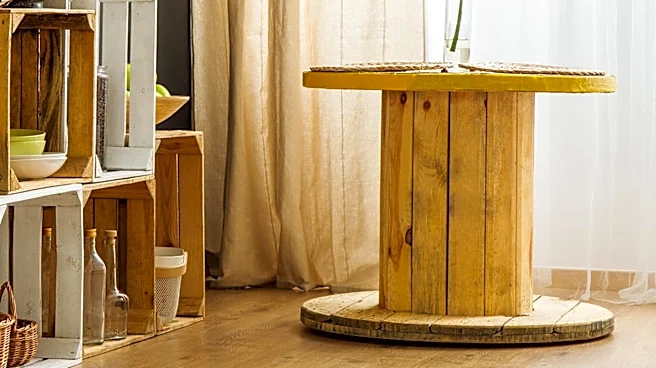
by various examples, such as the use of upcycled church pews and antique market carts in themed settings, and practical advice on transforming common items like IKEA furniture through repainting, layering textiles, and adding new features. The concept extends beyond mere cost-saving, evolving into a signal of sustainable design and uniqueness. Market researchers are observing a measurable growth trajectory in the second-hand furniture market, driven by increasing eco-consciousness and a desire for distinctive designs among consumers. This shift indicates a broader cultural embrace of repurposing and vintage items, moving from a niche activity to a mainstream retail force.
Why It's Important?
This growing trend in upcycled furniture is important for several reasons, impacting U.S. industries, consumer behavior, and environmental sustainability. Economically, the second-hand furniture market is projected to expand significantly, with estimates suggesting growth from approximately $47 billion in 2025 to around $62.7 billion by 2031. This expansion creates new opportunities for businesses involved in furniture restoration, customization, and resale, while also influencing manufacturing practices towards more sustainable models. Socially, the trend reflects a shift in consumer preferences, particularly among younger demographics like Gen Z and Millennials, who prioritize sustainability and individuality over mass-produced new items. This desire for 'one-of-a-kind' finds and the ability to signal identity through unique possessions are reshaping retail dynamics. Environmentally, upcycling contributes to a circular economy by extending the lifespan of existing furniture, reducing waste, and decreasing the demand for new raw materials, thereby lessening the ecological footprint of the furniture industry.
What's Next?
The future of upcycled furniture in the U.S. is expected to see continued growth and integration into mainstream retail and design practices. Analysts project sustained momentum in the circular home goods economy, with the second-hand furniture market expanding by billions in the coming years. Technology is anticipated to play a crucial role, with advancements in AI and machine learning enhancing online second-hand shopping through improved product recommendations, pricing algorithms, and customer service automation. This will make the process of finding and acquiring upcycled items more seamless for consumers. Furthermore, the trend is likely to solidify its position in high-end interior design, as a significant majority of designers are already incorporating older pieces into their work. This indicates that vintage and upcycled items will increasingly be seen not just as budget-friendly alternatives but as cornerstones of modern, sophisticated interior design, valued for their history, craftsmanship, and unique aesthetic.
Beyond the Headlines
Beyond the immediate economic and environmental benefits, the rise of upcycled furniture signifies deeper cultural and psychological shifts. It challenges the traditional consumerist paradigm that equates 'newness' with value and status, instead promoting an appreciation for age, provenance, and craftsmanship. This movement fosters a 'treasure hunt' mentality, where the thrill of discovery and the ability to recognize unique value become a new form of status signaling. Consumers are increasingly seeking items that offer a distinct narrative and allow for personal expression, moving away from the homogeneity of mass-market products. This shift also has ethical implications, encouraging more conscious consumption and a greater awareness of an item's lifecycle. The emphasis on individuality and sustainability could lead to a broader re-evaluation of how goods are produced, consumed, and valued across various industries, potentially fostering a more discerning and environmentally responsible consumer culture in the long term.