






What's Happening?
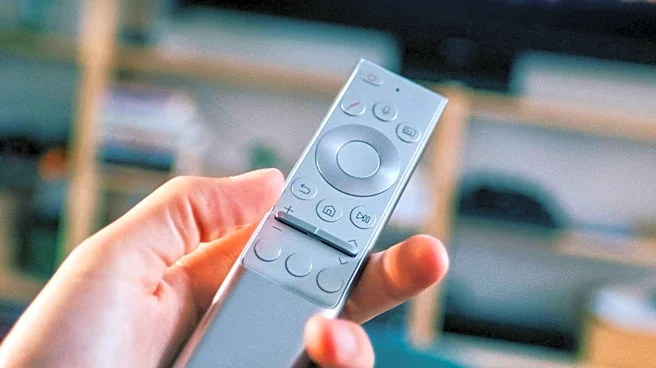
The television remote control, a device now ubiquitous in American households, has undergone significant evolution since its inception. The first TV remote, 'Lazy Bone,' introduced in 1950 by Zenith Electronics, was wired and posed tripping hazards. This
was followed by the wireless 'Flash-Matic' in 1955, which resembled a gun and used light signals, leading to unintended channel changes on sunny days. Zenith's 'Space Command' in 1956 utilized sound waves, producing the characteristic 'clicking' sound that earned remotes the nickname 'clicker.' The 1980s saw the advent of infrared remotes, which became essential with the expansion of multichannel cable television. This technological progression transformed television viewing habits, giving rise to 'channel surfers' and 'couch potatoes,' concepts that were non-existent before the remote's widespread adoption. The device's impact extended to TV programming strategies, as networks began to focus on 'program flow' to retain viewers and prevent channel changes, exemplified by CBS's successful Saturday night lineup in the 1970s and NBC's 'must-see TV' Thursdays.
Why It's Important?
The invention of the TV remote control profoundly reshaped American leisure and media consumption. It democratized control over television content, shifting power from a communal viewing experience to an individual one, often leading to disputes over who held the 'clicker.' This shift fostered a culture of instant gratification and reduced physical activity, contributing to the rise of the 'couch potato' phenomenon. For the television industry, the remote necessitated a fundamental change in programming strategies. Networks had to create more engaging and visually dynamic content to capture and retain the attention of viewers who could easily switch channels. This led to an emphasis on 'flashy' content to quickly grab a viewer's eye, influencing the pacing and style of television shows. The remote also introduced new domestic dynamics, with the search for a lost remote becoming a common household frustration, akin to losing a phone today. Eugene Polley, a pioneer of wireless remote technology, even equated its importance to that of the flush toilet and sex, highlighting its significant, albeit often unacknowledged, role in modern life.
What's Next?
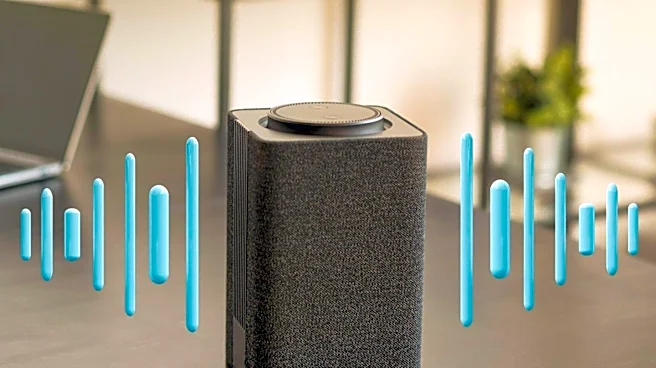
As technology continues to advance, the traditional TV remote control may face obsolescence. With the rise of smart home devices and voice-activated assistants, appliances are increasingly capable of listening and responding to commands, potentially rendering physical remotes unnecessary. The integration of artificial intelligence and natural language processing into entertainment systems suggests a future where users can control their televisions and other media devices through spoken commands or even gestures. This shift could further personalize the viewing experience, allowing for more intuitive and hands-free interaction. However, the transition may not be immediate, as many households still rely on traditional remotes, and the convenience of a tangible device for quick channel changes or volume adjustments remains appealing to a segment of the population. The ongoing evolution of smart technology will likely dictate the pace at which the physical remote fades away, potentially leading to new forms of interaction with media that are yet to be widely adopted.
Beyond the Headlines
Beyond its immediate function, the TV remote control has subtly influenced societal behaviors and expectations. It has fostered a culture of instant access and control, where individuals expect to manipulate their environment with minimal effort. This expectation has permeated other aspects of life, contributing to the demand for convenience in various services and products. The remote also symbolizes a shift towards individual autonomy in entertainment choices, potentially contributing to the fragmentation of shared cultural experiences as viewers increasingly curate their own content streams. Ethically, the remote raises questions about passive consumption and its impact on engagement with media. While it offers convenience, it can also encourage superficial browsing rather than deep engagement with content. Legally, the development of remote control technology has been intertwined with intellectual property rights and patent disputes, as companies vied for dominance in this lucrative market. Culturally, the 'clicker' has become an iconic symbol of modern domestic life, often featured in popular media as a source of humor or conflict, reflecting its deep integration into the American household.