





What's Happening?
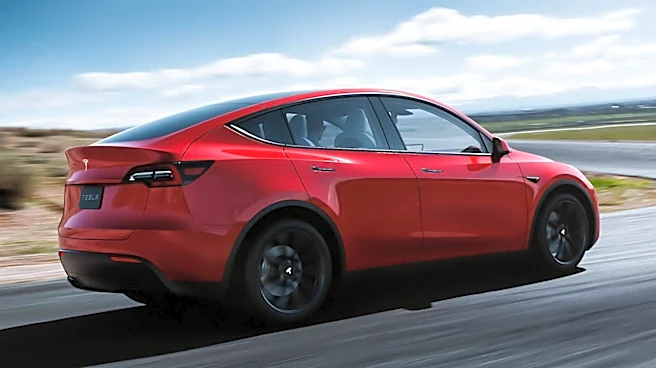
Tesla has begun offering an optional vehicle-to-load (V2L) adapter for its Model Y Premium and Performance trims in the U.S. This new $80 accessory allows the electric vehicle to function as a mobile power bank, capable of charging various external gadgets
such as phones and laptops. The adapter provides 120V, 20A power with a maximum output of 2.4kW. To utilize this feature, owners must also have Tesla's Gen 3 Mobile Connector. While other automotive manufacturers like Ford and Hyundai have offered V2L capabilities in their vehicles for some time, this marks Tesla's entry into this specific functionality for the Model Y. Notably, the V2L adapter is not available for non-Premium Model Y trims or any Model 3 variants. The more luxurious Cybertruck already includes both V2L and vehicle-to-home (V2H) functionality, with the latter requiring an additional 'Universal Home Charger and Gateway' priced at $1,970.
Why It's Important?
The introduction of the V2L adapter for the Tesla Model Y is a significant development for U.S. consumers and the electric vehicle market. It enhances the utility of the Model Y, transforming it from solely a mode of transportation into a versatile power source, which can be particularly valuable during power outages, camping trips, or remote work scenarios. This feature addresses a growing consumer demand for greater energy independence and multi-functional vehicles. While Tesla has been a pioneer in electric vehicle technology, its delayed adoption of V2L compared to competitors like Ford and Hyundai highlights a strategic shift to meet evolving market expectations. The availability of this adapter could influence purchasing decisions for potential EV buyers who prioritize the ability to power external devices. It also signals Tesla's continued expansion of its ecosystem, offering more integrated solutions for its users, and potentially driving further innovation in vehicle-to-grid or vehicle-to-home technologies in the broader automotive industry.
What's Next?
Tesla Model Y Premium and Performance owners in the U.S. can now purchase the V2L adapter to expand their vehicle's functionality. It is expected that demand for this accessory will grow as more consumers recognize the practical benefits of using their EV as a portable power source. Tesla may consider expanding V2L compatibility to other Model Y trims or even Model 3 variants in the future, depending on market reception and competitive pressures. The success of this adapter could also accelerate the development and integration of more advanced V2H capabilities across Tesla's lineup, potentially allowing EVs to power entire homes during emergencies. Competitors in the EV market will likely continue to innovate in this space, leading to a broader offering of vehicle-to-device and vehicle-to-home solutions across the industry. This trend underscores a future where electric vehicles play a more integral role in personal and household energy management.
Beyond the Headlines
The V2L adapter for the Tesla Model Y represents more than just a new accessory; it symbolizes a broader paradigm shift in how consumers perceive and utilize their vehicles. This functionality blurs the lines between transportation, energy storage, and mobile power solutions, pushing electric vehicles further into the realm of essential household infrastructure. The ability to power critical devices from a car during emergencies, for instance, highlights the growing resilience and self-sufficiency that EVs can offer. Ethically, this raises questions about energy consumption and the environmental impact of using a large vehicle battery for small device charging, though the overall benefit of reducing reliance on fossil fuel generators might outweigh these concerns. Culturally, it reinforces the idea of the car as a central hub for modern life, capable of supporting diverse activities from remote work to outdoor adventures. This evolution of vehicle utility could fundamentally alter consumer expectations for future automotive designs and functionalities, making multi-purpose energy capabilities a standard rather than a luxury.