







What's Happening?
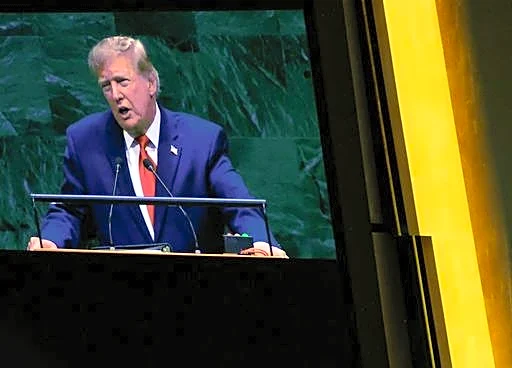
The U.S. Export-Import Bank (EXIM) is planning to provide up to $9.88 billion in financing for critical minerals and energy projects in Argentina. This initiative, expected to be announced in New York during the UN General Assembly, aims to strengthen
economic ties between the U.S. and Argentina. The funding will be made available over the next two years, primarily through loans to companies operating in Argentina that procure equipment from U.S. manufacturers. Argentina possesses significant deposits of critical minerals such as lithium and copper, alongside the Vaca Muerta shale oil and gas formation. Major mining companies like Rio Tinto and BHP Group are already active in the country. This financial commitment follows a preferential trade and investment agreement between the U.S. and Argentina announced in February, which included cooperation on critical minerals and is awaiting ratification by Argentina's Congress.
Why It's Important?
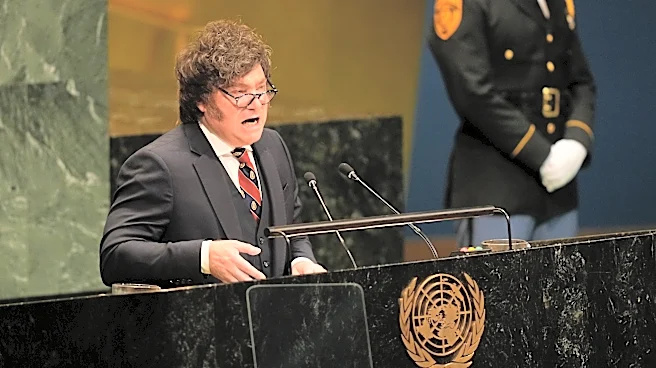
This substantial financial commitment from the U.S. Export-Import Bank is important for several reasons. Firstly, it underscores the U.S.'s strategic interest in securing access to critical minerals, which are essential for various high-tech industries and the transition to clean energy. By financing projects in Argentina, the U.S. aims to diversify its supply chains and reduce reliance on other nations for these vital resources. Secondly, it represents a significant economic boost for Argentina, potentially attracting further foreign investment and accelerating the development of its mining and energy sectors. The Argentine government, under President Javier Milei, has already introduced the Incentive Regime for Large Investments (RIGI) to draw capital into these sectors, and this U.S. financing aligns with those efforts. The projected growth in Argentina's lithium and copper exports by 2036, as stated by Mining Minister Luis Lucero, highlights the potential impact of such investments on the global market and Argentina's economy.
What's Next?
The official announcement of this financing package is anticipated during the UN General Assembly in New York. Following this, the focus will shift to the implementation of the funding, including the identification of specific recipient companies and projects. The success of this initiative will also depend on the ratification of the preferential trade and investment agreement by Argentina's Congress. Should the agreement be ratified and the funds deployed, it is expected to stimulate significant activity in Argentina's critical minerals and energy sectors. This could lead to increased demand for U.S. manufacturing equipment and services, further integrating the two economies. Additionally, the development of these projects will be closely watched for their environmental and social impacts, particularly given the sensitive nature of resource extraction.
Beyond the Headlines
Beyond the immediate economic and strategic implications, this move highlights a broader geopolitical trend of major powers vying for control over critical mineral supply chains. The U.S.'s investment in Argentina's resources can be seen as part of a larger strategy to counter the influence of other global players in Latin America and secure essential materials for its own industrial and technological future. The emphasis on critical minerals also reflects the accelerating global shift towards renewable energy and electric vehicles, which are heavily dependent on these materials. This initiative could set a precedent for future U.S. engagement in resource-rich developing nations, potentially shaping international trade relationships and resource governance for decades to come. The long-term success will also depend on the stability of Argentina's political and economic environment and its ability to manage large-scale foreign investments effectively.