



What's Happening?
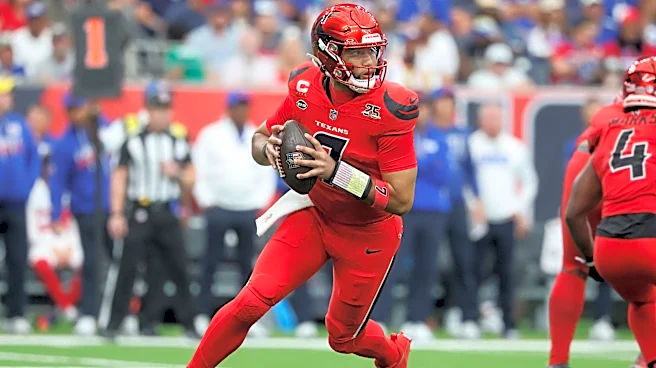
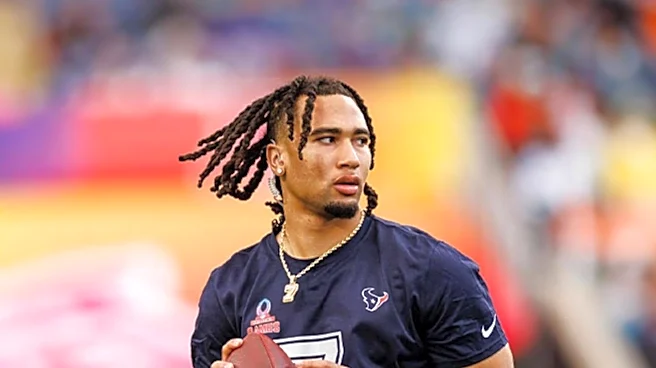
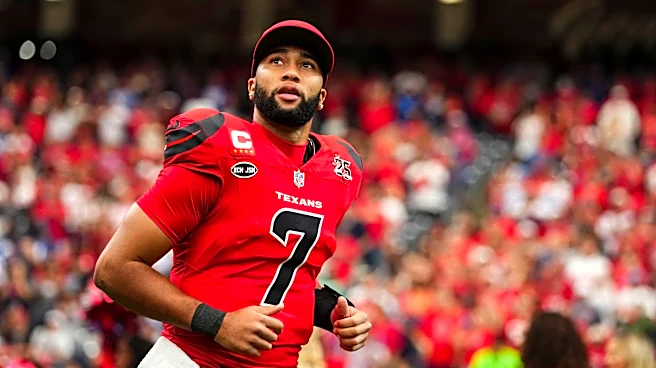
The Houston Texans are facing significant challenges despite quarterback C.J. Stroud's impressive individual performance through the first seven games of the season. Stroud has recorded 1,867 passing yards, 11 touchdowns, and only one interception, achieving
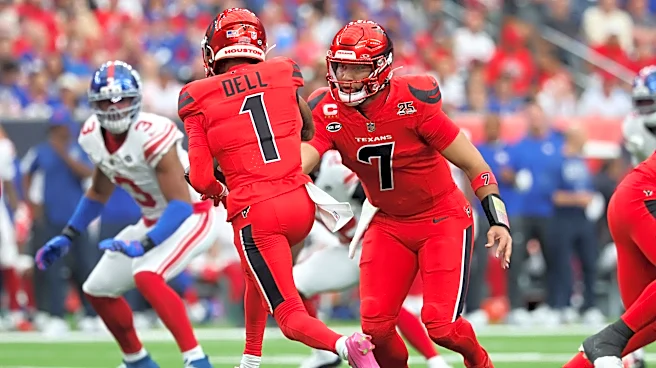
a passer rating of 100.7. However, the team holds a disappointing 2-5 record, failing to meet pre-season Super Bowl aspirations. The Texans' struggles stem from inconsistencies across both offense and defense. The running game has been particularly ineffective, averaging just 84.7 rushing yards per game, even after the addition of David Montgomery. The offensive line has also struggled with both creating running lanes and pass protection. These issues have placed a heavy burden on Stroud, who has not received sufficient support from his teammates or consistent play-calling from offensive coordinator Nick Caley. The team has shown flashes of offensive potential but has been unable to sustain complete performances from week to week.
Why It's Important?
The Texans' inability to translate Stroud's elite play into wins highlights a critical issue for NFL teams: individual brilliance often isn't enough without a cohesive team effort. For the Texans, wasting Stroud's prime years due to systemic failures could have long-term consequences for the franchise's competitiveness and fan engagement. The struggles in the running game and offensive line directly impact Stroud's effectiveness, increasing his risk of injury and limiting the offense's versatility. This situation also puts pressure on the coaching staff, particularly offensive coordinator Nick Caley, to adjust strategies and improve overall team execution. If the team cannot build a more consistent supporting cast around Stroud, it risks squandering a valuable asset and delaying its return to contention, impacting potential revenue streams and the team's market value.
What's Next?
The Houston Texans are expected to address their team's inconsistencies, particularly in the running game and offensive line, as they move forward in the season. There will likely be increased scrutiny on offensive coordinator Nick Caley to implement more effective play-calling that leverages Stroud's strengths while mitigating the team's weaknesses. The upcoming NFL trade deadline could see the Texans exploring options to bolster their roster, especially at positions like safety and running back, where they have shown interest. The team's management will need to evaluate personnel decisions and potentially make changes to ensure Stroud receives the necessary support to translate his performance into team victories. Failure to do so could lead to further disappointment and potential changes within the coaching staff or front office in the offseason.
Beyond the Headlines
The Texans' situation with C.J. Stroud reflects a broader narrative in professional sports where the performance of a star player can mask underlying team deficiencies. While Stroud's individual statistics are impressive, the team's losing record points to a fundamental imbalance in roster construction and strategic execution. This scenario raises questions about the allocation of resources and the effectiveness of player development beyond the quarterback position. Ethically, there's a responsibility for the organization to provide a competitive environment for its star players, especially those performing at an elite level. Long-term, if the Texans fail to capitalize on Stroud's talent, it could impact their ability to attract future free agents and maintain a strong fan base, potentially leading to a prolonged period of rebuilding despite having a franchise quarterback.