

What's Happening?
Mark Cuban, former owner of the Dallas Mavericks, recently discussed past trade decisions, specifically mentioning players he was reluctant to move and the outcome of the Kristaps Porziņģis trade. Speaking on the 'Free Range with Von Miller' podcast,
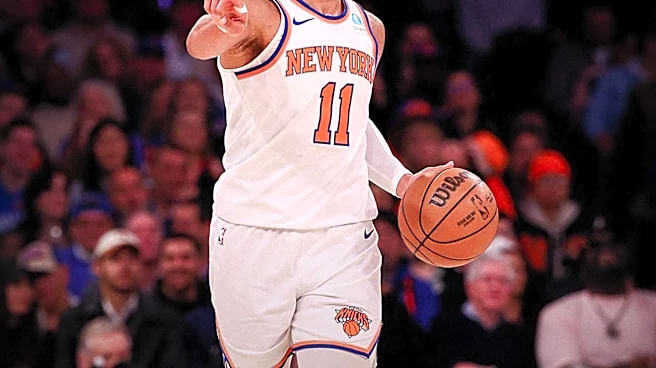
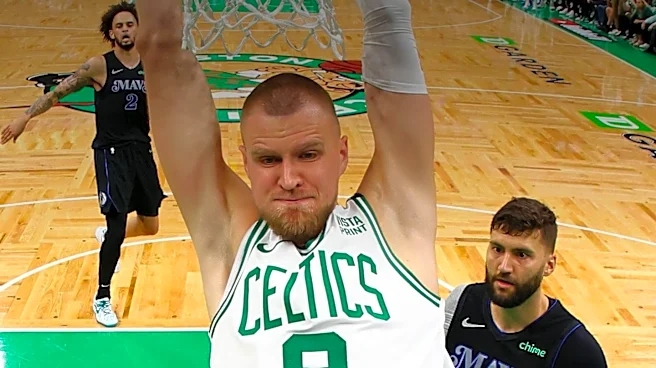
Cuban stated he never wanted to trade Wesley Matthews and Harrison Barnes, acknowledging that such moves are often necessary when a team aims to rebuild with younger talent, particularly around a player like Luka Dončić. The Mavericks traded Matthews to the New York Knicks in January 2019 as part of a package that brought Porziņģis, Tim Hardaway Jr., Courtney Lee, and Trey Burke to Dallas. Matthews was averaging 13.1 points at the time. A week later, Barnes, who was averaging 17.7 points, was sent to Sacramento. Porziņģis, who had been recovering from an ACL tear, signed a five-year, $158 million contract with Dallas that summer. He averaged 20.0 points and 8.8 rebounds over 134 games with the Mavericks before being traded to Washington in February 2022. Cuban admitted that the Porziņģis deal "didn't work out the way we expected."
Why It's Important?
Cuban's reflections offer insight into the complex decision-making process within professional sports franchises, particularly the tension between player loyalty and strategic team building. His comments highlight the significant financial and roster implications of high-profile trades in the NBA. The Porziņģis trade, in particular, represents a substantial investment that ultimately did not yield the anticipated results for the Mavericks, impacting their competitive trajectory and resource allocation. For fans and analysts, this provides a rare glimpse into the owner's perspective on difficult personnel decisions and the inherent risks involved in acquiring star players, especially those with injury histories. The discussion also underscores the cyclical nature of NBA teams, where veteran players are often moved to make way for younger talent, a process that can be emotionally challenging for both owners and players.
What's Next?
While Cuban no longer holds controlling interest in the Mavericks, his continued role as alternate governor means his insights remain relevant to the team's long-term strategy and the broader NBA landscape. His comments may prompt further discussion among sports commentators and fans regarding the success and failures of past Mavericks' trades and their impact on the team's current composition. For other NBA franchises, Cuban's experience with the Porziņģis trade could serve as a cautionary tale regarding large contracts for players with significant injury concerns. The Mavericks will continue to build around Luka Dončić, and future roster moves will undoubtedly be scrutinized through the lens of past decisions, including those Cuban now openly discusses.
Beyond the Headlines
Cuban's remarks delve into the often-unseen human element of professional sports, where business decisions intersect with personal relationships and player careers. His acknowledgment of not wanting to trade certain players, despite the strategic necessity, reveals the emotional toll such decisions can take on ownership. This perspective challenges the perception of owners as purely profit-driven entities, suggesting a deeper connection to the team and its personnel. Furthermore, the Porziņģis trade's outcome highlights the inherent unpredictability of sports investments, where even well-researched decisions can fall short due to unforeseen circumstances like injuries or chemistry issues. This narrative contributes to a broader understanding of the ethical considerations and personal sacrifices involved in managing a high-stakes professional sports franchise.