








What's Happening?
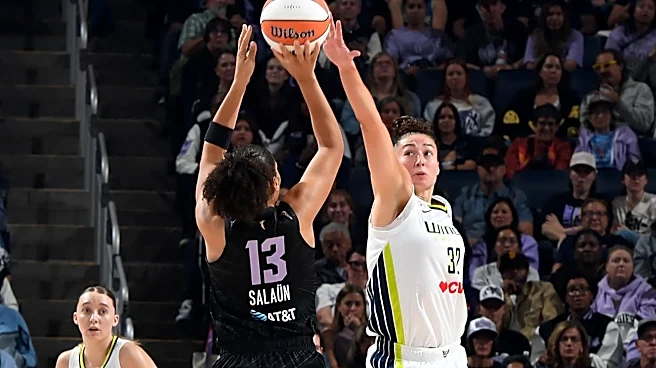
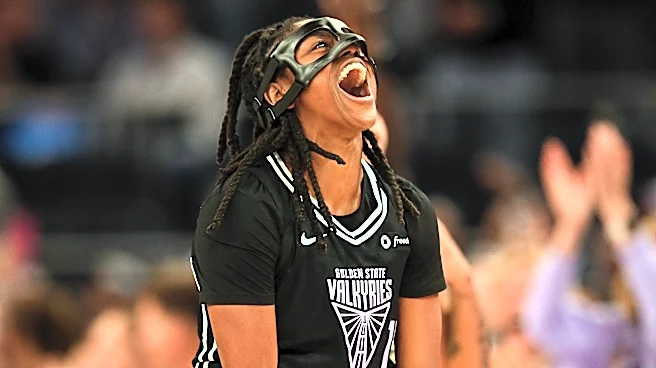
The Golden State Valkyries, a WNBA team, have achieved a historic valuation of $1 billion, according to U.S. media reports. This milestone comes just two seasons after the franchise's inception, during which they have also secured their first WNBA championship.
The team has consistently sold out all home games at the Chase Center, which is affectionately renamed 'Ballhala' during their matches. Their recent WNBA Finals Game 7 against the Atlanta Dream set a new playoff viewership record for the league, attracting over 3.3 million television viewers. The team's success is attributed to a collective playing style, a departure from the more individualistic approach often seen in American women's basketball, and the strategic contributions of Spanish Director of Performance and Medical Department, Lorena Torres. Torres emphasized building a strong bench and managing player minutes effectively, a strategy she describes as more 'European'.
Why It's Important?
The Golden State Valkyries' rapid ascent to a $1 billion valuation and a WNBA championship signifies a pivotal moment for women's sports in the United States. This financial success demonstrates the significant return on investment possible in women's leagues, challenging traditional perceptions and potentially attracting more capital to female athletics. The record-breaking viewership for their championship game highlights a growing audience and commercial appeal for the WNBA, which could lead to increased media rights deals and sponsorship opportunities across the league. The team's emphasis on a collective playing style, as influenced by Lorena Torres, also offers a new model for success in American basketball, potentially shifting coaching philosophies and player development strategies. This success could inspire other franchises to invest more in comprehensive performance and medical departments, recognizing their critical role in team achievement and player well-being.
What's Next?
The Golden State Valkyries' continued success and high valuation are likely to influence future investment and expansion within the WNBA. Other teams and potential new franchises may look to replicate the Valkyries' model of strategic player management and collective team building. The increased visibility and financial viability demonstrated by the Valkyries could also lead to higher player salaries and improved facilities across the league, benefiting athletes. Lorena Torres noted that while the team currently thrives without traditional 'superstars,' future seasons might see the acquisition of such players, which would require adapting their management strategies. The league as a whole may experience further growth in viewership and fan engagement, potentially leading to more lucrative broadcasting contracts and greater mainstream recognition for women's basketball.
Beyond the Headlines
The Valkyries' success extends beyond immediate financial and athletic achievements, signaling a broader cultural shift in the perception and value of women's sports. The investment in and subsequent triumph of a women's team, particularly one built from scratch with a distinct strategic approach, challenges long-standing biases regarding the profitability and entertainment value of female athletics. This development could foster greater gender equity in sports, encouraging more research and investment specifically into women's athletic health and performance, an area historically underrepresented compared to men's sports. The team's ability to fill the Chase Center, a venue typically associated with the NBA's Golden State Warriors, indicates that women's basketball can cultivate its own dedicated and passionate fanbase, rather than merely relying on spillover from men's leagues. This success story serves as a powerful testament to the potential of investing in women's sports, not just as a social good, but as a viable and highly profitable business venture.