






What's Happening?
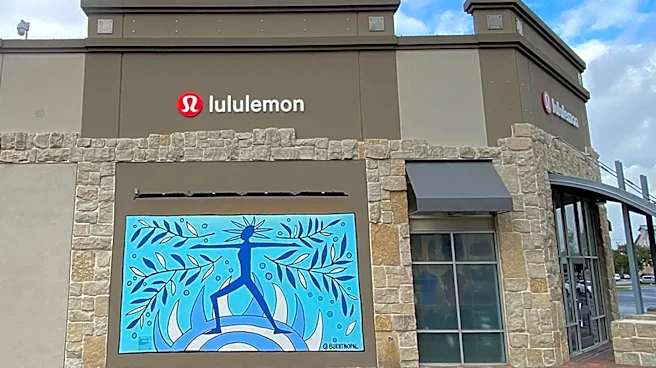
Goldman Sachs successfully secured the mandate for Lululemon's initial public offering (IPO) by demonstrating a deep understanding and alignment with the brand's culture. According to Goldman CEO David Solomon, the firm's representatives attended the IPO pitch
dressed head-to-toe in Lululemon apparel, while a rival bank arrived in traditional suits. This strategic move highlighted Goldman Sachs's recognition of Lululemon's strong brand identity and its emphasis on who wears its products and where they are showcased. Lululemon has historically been meticulous about its brand image, even blocking customers flagged as aggregate resellers from its site to prevent its products from appearing in 'the wrong cart.' However, this brand instinct is currently being tested, as Lululemon's stock has declined by approximately 47% this year, and its products have appeared at Sam's Club at nearly half price, a distribution channel that the brand likely did not choose.
Why It's Important?
This anecdote illustrates the critical role of brand alignment and cultural understanding in high-stakes business dealings, particularly in the retail and financial sectors. Goldman Sachs's approach to the Lululemon IPO pitch demonstrates that beyond financial metrics, understanding a client's brand ethos can be a decisive factor in securing major mandates. For Lululemon, the current challenges, including a significant stock drop and unexpected discount distribution, highlight the tension between maintaining brand exclusivity and pursuing growth. The appearance of its products in discount retailers like Sam's Club can dilute brand perception, potentially alienating its core customer base and authorized retailers. This situation underscores the difficulties brands face in controlling their image and distribution channels, especially when growth pressures lead to partnerships that may not align with their established identity.
What's Next?
Lululemon faces the challenge of reconciling its brand exclusivity with market pressures for growth and broader distribution. The company will need to strategize how to manage its wholesale partnerships more effectively to prevent brand dilution and maintain its premium image. This may involve stricter vetting processes for partners and enhanced visibility into product distribution channels. The retail industry as a whole may see increased scrutiny on B2B relationships, with brands seeking solutions to regain control over where and how their products are sold. Technology solutions, such as AI infrastructure designed to track product diversion, could become more prevalent as brands strive to protect their market positioning and authorized sales channels.
Beyond the Headlines
The Lululemon case study reveals a deeper issue within the retail industry: the struggle between brand integrity and the relentless pursuit of growth. Brands often spend years cultivating a specific image and target demographic, only to find that expansion efforts can inadvertently compromise these carefully constructed identities. The pressure from shareholders for continuous growth can lead to decisions that prioritize volume over brand control, resulting in products appearing in unintended markets at discounted prices. This can create a ripple effect, undercutting authorized retailers and eroding customer loyalty. The incident also highlights the evolving nature of brand management in an interconnected marketplace, where maintaining control over distribution and pricing is increasingly complex. It raises ethical questions about how far brands should go to protect their image versus meeting market demands.