


What's Happening?
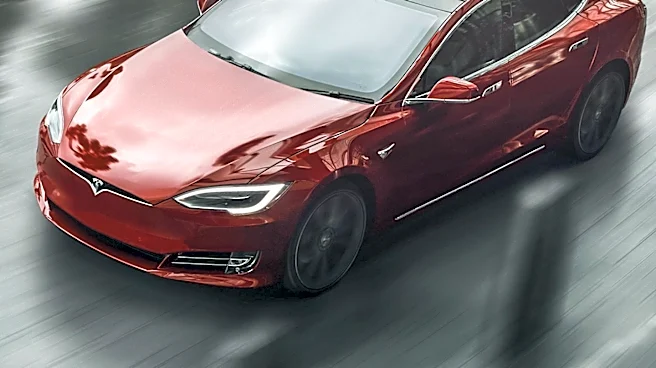
Tesla's Full Self-Driving (FSD) system is under scrutiny as drivers report receiving speeding tickets while using the feature. A recent incident in Parker, Colorado, involved a Tesla being pulled over for speeding, with the driver claiming that the Autopilot
was engaged. Despite the driver's plea, the police emphasized that driver assistance technology does not absolve the driver of responsibility. Tesla's FSD system has been criticized for allowing vehicles to exceed speed limits, even in standard mode, and for removing the adjustable speed offset feature. This has led to frustration among Tesla owners, who feel that the system's design may inadvertently encourage speeding.
Why It's Important?
The controversy surrounding Tesla's FSD system highlights the ongoing challenges in the development and regulation of autonomous driving technologies. As these systems become more prevalent, questions about liability and safety standards are increasingly important. The issue also underscores the need for clear communication between automakers, regulators, and consumers regarding the capabilities and limitations of driver assistance technologies. The outcome of these discussions could significantly impact the future of autonomous vehicles and the legal frameworks governing their use.
What's Next?
Tesla may need to address the concerns raised by drivers and regulators by revisiting the design and functionality of its FSD system. This could involve reintroducing features that allow drivers to set speed limits or implementing additional safeguards to prevent speeding. Regulatory bodies may also consider updating guidelines to better accommodate the nuances of autonomous driving technologies. As the debate continues, Tesla and other automakers will likely face increased pressure to ensure that their systems prioritize safety and compliance with traffic laws.