





What's Happening?
The Peter Pan Center is highlighting the importance of real-time social coaching to help children, particularly those with ADHD or attention-shifting challenges, recognize and respond to social cues. The center observes that children often miss opportunities
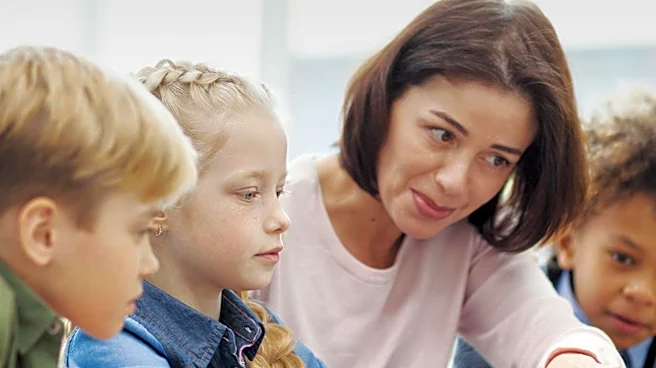
for social interaction not due to rudeness or disinterest, but because they are deeply focused on an activity and do not register external social overtures. An example provided illustrates a child, Katie, engrossed in dollhouse play, completely missing an invitation from another child, Hannah. A simple, timely prompt from an adult helped bridge this missed interaction, allowing Katie to join Hannah in play. This approach focuses on immediate intervention to guide children in recognizing social opportunities as they happen, rather than relying on retrospective lectures or discussions about manners.
Why It's Important?
This approach to social skill development is crucial for fostering healthy social interactions and preventing feelings of rejection or isolation in children. When children consistently miss social cues, it can lead to misunderstandings, where peers might perceive them as rude or uninterested, potentially hindering friendship formation. For children with attention challenges, this real-time coaching provides a practical tool to navigate complex social environments, helping them to develop essential skills like asking, waiting, handling unfavorable responses, and understanding others' reactions. By intervening in the moment, the Peter Pan Center aims to build confidence and competence in social settings, which can have long-term positive impacts on a child's emotional well-being and ability to form meaningful relationships. This method also educates adults on how to effectively support children in these situations, shifting the focus from judgment to supportive guidance.
What's Next?
The Peter Pan Center continues to offer weekly social coaching programs and resources through its Peter Pan Coaching Library, aiming to expand the reach of its real-time intervention strategies. The center also provides a parent guide, 'Why Can’t My Child Make Friends?', which delves into the skills and challenges associated with friendship development. Future efforts will likely involve further dissemination of these coaching observations and strategies through platforms like the 'Social Coaching Scoop' email list. The emphasis will remain on empowering children to recognize and act on social opportunities, thereby fostering more successful and fulfilling social interactions. The center's work suggests a continued focus on practical, in-the-moment support for children's social development.
Beyond the Headlines
The Peter Pan Center's methodology touches upon broader implications regarding neurodiversity and social learning. It challenges conventional assumptions about children's social behavior, suggesting that what appears to be a behavioral issue might often be a cognitive processing difference. This perspective advocates for a more empathetic and informed approach to social skill development, moving away from punitive measures towards supportive coaching. The long-term societal impact could include a greater understanding and acceptance of diverse social interaction styles, potentially leading to more inclusive environments in schools and communities. By equipping children with the tools to navigate social complexities, the center contributes to building a generation that is more adept at forming connections, regardless of their individual cognitive profiles.