
What's Happening?
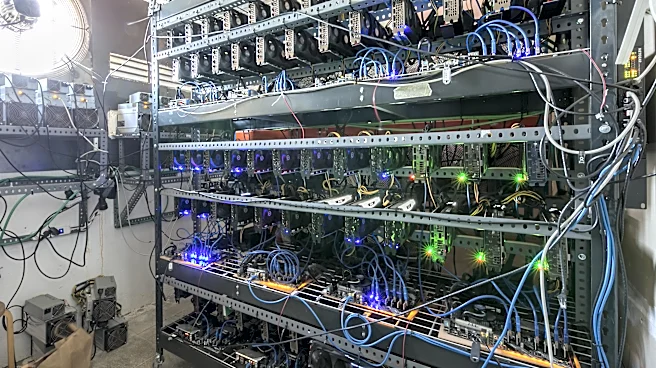
Cipher Mining, now operating as Cipher Digital, is shifting its business model from primarily Bitcoin mining to developing and operating large-scale data centers for high-performance computing (HPC) and artificial
intelligence (AI) infrastructure. The company is moving towards a colocation approach, leasing HPC capacity to large tenants rather than running its own cloud services. In the most recent quarter, Cipher Digital reported a 63% year-over-year revenue drop to $26.7 million, though this was partially offset by the first $5.9 million generated from HPC leases. Management has announced approximately $16.6 billion in contracted revenue across three sites, with 700 MW of HPC capacity under contract. Despite these contracts, the company's shares have experienced significant pressure, falling about 55% year-to-date through mid-November and recently hitting a 52-week low. This decline is attributed to elevated debt, construction risks, and broader market selling pressure affecting technology and data center companies, including a more than 11% plunge following a decline in AI infrastructure stocks alongside NVIDIA Corp.
Why It's Important?
This strategic pivot by Cipher Digital is significant for the U.S. technology and financial sectors, as it reflects a broader trend among Bitcoin mining firms to diversify into AI and HPC infrastructure. The substantial $16.6 billion in contracted revenue provides a more stable and predictable income stream compared to the volatile nature of Bitcoin mining, which is heavily influenced by cryptocurrency prices. This shift could attract new investment into the data center and AI infrastructure markets, potentially fostering innovation and job creation in these high-growth areas. However, the company's high debt levels and construction risks pose challenges, indicating that successful execution of these contracts is crucial for investor confidence. The performance of Cipher Digital and similar companies will serve as a bellwether for how traditional crypto-centric businesses can adapt and thrive in the evolving digital economy, impacting stakeholders ranging from technology investors to energy providers and local communities hosting these data centers.
What's Next?
Cipher Digital's immediate focus will likely be on the successful execution and delivery of its contracted HPC capacity. The company needs to demonstrate its ability to manage construction schedules and debt obligations effectively to convert its substantial contracted revenue into actual earnings. Investors will be closely watching for further updates on HPC lease revenues and the progress of its data center buildouts. The company's stock performance will continue to be influenced by its operational milestones, the broader market sentiment towards AI infrastructure, and the performance of key technology players like NVIDIA. The success of this transition could encourage other Bitcoin miners to follow suit, further accelerating the convergence of cryptocurrency infrastructure with mainstream AI and HPC demands. Conversely, any significant setbacks in construction or tenant acquisition could exacerbate existing investor concerns regarding debt and profitability.
Beyond the Headlines
The transition of Cipher Digital from Bitcoin mining to AI and HPC infrastructure highlights a fundamental shift in how digital assets and computing power are valued and utilized. This move underscores the increasing demand for high-performance computing resources driven by the rapid advancements in AI, machine learning, and complex data analytics. It also raises questions about the long-term viability of pure-play Bitcoin mining operations, suggesting that diversification into more stable and in-demand services may become a necessity for survival and growth. The ethical and environmental implications of large-scale data centers, particularly concerning energy consumption and sustainability, will also become more prominent as these facilities expand. This strategic pivot could redefine the competitive landscape within the data center industry, potentially leading to new partnerships, technological innovations, and regulatory considerations as the lines between cryptocurrency, AI, and traditional computing infrastructure continue to blur.