


What's Happening?
Nigerian state governments have experienced a significant increase in revenues between 2023 and 2025, with aggregate state revenues rising by approximately 93% and expenditure by about 92%. This surge in funds, detailed in the World Bank's October 2026
Nigeria Development Update, 'Beyond the Federal Purse: How Higher Revenues Shaped State Priorities,' is attributed to petrol subsidy removal, foreign exchange reforms, and improved revenue administration. The World Bank report highlights that gross federation revenues increased by 69% in real terms during the same period. While these financial gains offer states greater capacity to address infrastructure deficits and enhance essential services, the report raises concerns about how these increased funds are being prioritized and whether they are effectively translating into improved public services for citizens. Capital expenditure has seen a rise from 46% to 61% of total state spending, with a substantial portion directed towards transport infrastructure. However, the share of education in total state expenditure declined from 14.9% in 2021 to 12.1% in 2025, and health spending remained stable at around 7%.
Why It's Important?
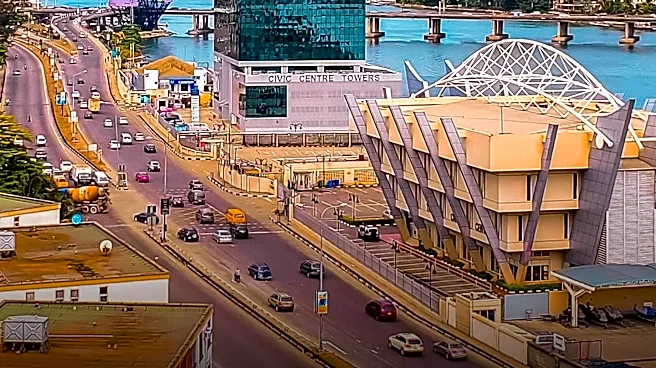
The effective utilization of increased revenues by Nigerian state governments is crucial for the nation's broader economic recovery and the well-being of its citizens. With businesses facing high operating costs and millions of households vulnerable to rising prices for food, transport, and energy, the quality of public spending directly impacts economic stability and growth. Investments in transport infrastructure, such as roads and bridges, have the potential to reduce logistics costs, connect agricultural producers to markets, and improve access to employment, thereby strengthening productive activity in an economy constrained by unreliable infrastructure. However, the World Bank emphasizes that higher capital spending does not automatically lead to better economic outcomes without effective project selection, procurement, and monitoring. The declining share of education spending and stagnant health spending raise concerns about human development, which is complementary to physical infrastructure. A productive economy requires educated workers, functional healthcare, and social protection, suggesting that an imbalance in investment priorities could limit the long-term economic returns on infrastructure projects.
What's Next?
The immediate future will likely involve increased scrutiny on how Nigerian state governments manage their expanded fiscal resources. Citizens and international bodies will be looking for tangible evidence that these higher revenues are translating into improved living conditions and better public services. State governments will need to demonstrate disciplined spending, ensure the sustainability of public finances, and enhance accountability for results. This includes ensuring that infrastructure projects are completed, maintained, and deliver measurable benefits to businesses and households. Furthermore, there will be pressure to re-evaluate spending priorities to ensure a balanced approach that addresses both physical infrastructure and human capital development, particularly in education and health. States will also need to focus on strengthening sustainable internally generated revenue sources to reduce dependence on federation transfers, which are susceptible to fluctuations in oil prices and production, thereby enhancing fiscal resilience.
Beyond the Headlines
Beyond the immediate financial figures, the situation in Nigeria highlights a critical governance challenge: the effective conversion of increased financial resources into tangible development outcomes and improved human welfare. The World Bank's findings suggest that while states have more money, the fundamental issue is whether their spending choices are genuinely building productive economies and enhancing human well-being. This involves not just the allocation of funds but also the efficiency and transparency of public expenditure. The decline in education's share of state budgets, despite overall revenue increases, points to a potential long-term risk to human capital development, which is essential for sustained economic growth and poverty reduction. The emphasis on physical infrastructure over human development could create an imbalance, where economic gains are not equitably distributed or sustainable. This scenario underscores the importance of robust public financial management systems, citizen participation in budget processes, and strong accountability mechanisms to ensure that public funds serve the broader developmental goals of the nation.