
What's Happening?
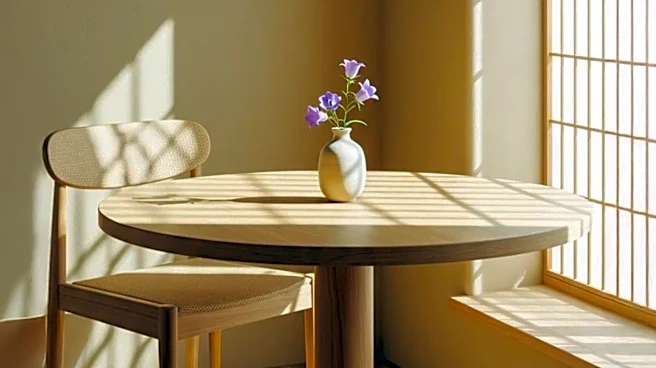
Japandi art, a fusion of Japanese minimalism and Scandinavian comfort, is gaining traction in interior design. This style emphasizes clean lines, neutral tones, and a focus on simplicity and functionality.
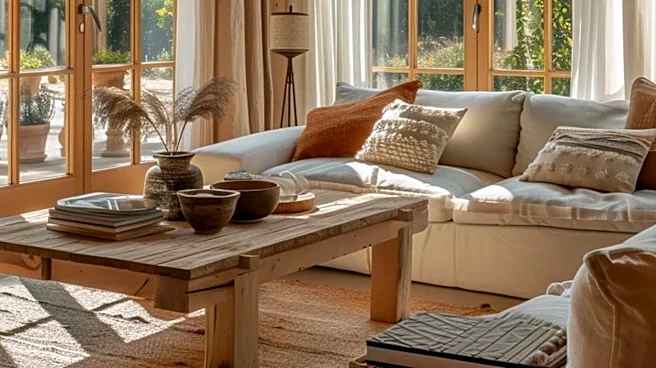
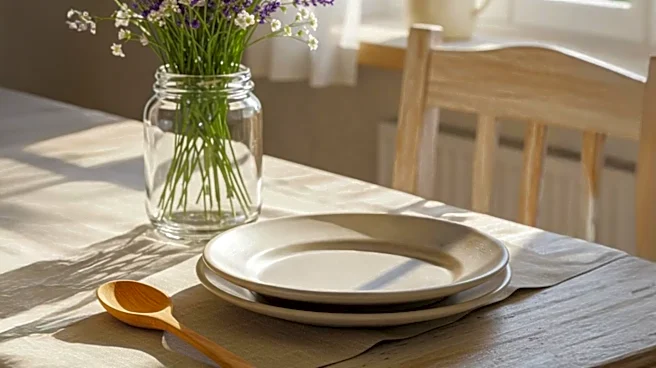
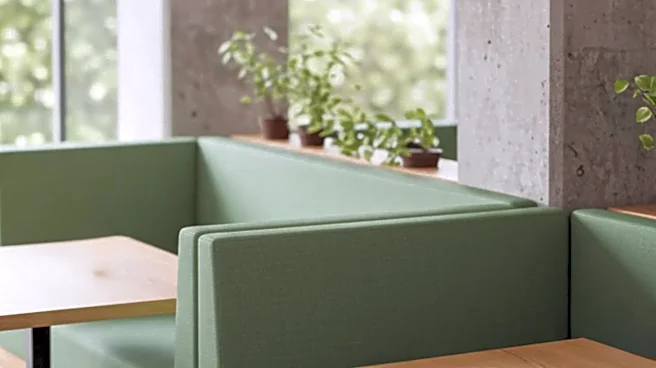
Key characteristics include pale wood, soft neutrals like white, cream, beige, and soft black, and clear surfaces with minimal clutter. Japandi art itself is characterized by simple, quiet pieces, often featuring clean lines, abstract shapes, or single botanicals with ample empty space. The aesthetic prioritizes calm and restraint, avoiding busy details or loud colors. It incorporates natural materials such as linen, wool, paper, and rattan, creating a warm yet uncluttered environment. The color palette is predominantly light and natural, with black used sparingly for contrast, and muted green from plants adding a subtle touch.
Why It's Important?
The rise of Japandi art and design reflects a broader cultural shift towards mindfulness and decluttering in American homes. As consumers seek more serene and functional living spaces, this aesthetic offers a compelling solution. Its emphasis on natural materials and a subdued color palette aligns with growing environmental consciousness and a desire for sustainable design choices. For the U.S. interior design and home furnishings industries, this trend presents opportunities for new product lines and marketing strategies. Retailers and designers who can effectively cater to the demand for Japandi-inspired pieces, from furniture to wall art, stand to gain. The style's versatility also means it can appeal to a wide demographic, from urban dwellers seeking calm in small spaces to suburban homeowners looking for a sophisticated yet comfortable aesthetic.
What's Next?
The continued integration of Japandi principles into mainstream U.S. interior design is expected. We may see an increase in furniture and decor collections that blend Japanese and Scandinavian elements, focusing on natural textures, light woods, and minimalist forms. Design publications and home improvement shows are likely to feature more Japandi-inspired spaces, further popularizing the trend. Consumers can anticipate a wider availability of Japandi art prints, often framed in light natural wood or slim black, designed to complement this aesthetic. The emphasis on creating restful and uncluttered environments suggests that this design philosophy will continue to influence how Americans approach their living spaces, potentially leading to a long-term shift in design preferences.
Beyond the Headlines
Beyond its aesthetic appeal, Japandi design embodies a philosophy that encourages intentional living and a deeper connection to nature. The Japanese concept of 'wabi-sabi,' which finds beauty in imperfection and transience, combined with the Scandinavian focus on 'hygge,' or coziness and well-being, creates a holistic approach to home design. This trend could subtly influence American consumer behavior, encouraging a move away from fast furniture and excessive consumption towards more thoughtful, durable, and timeless pieces. It also highlights a growing appreciation for cross-cultural design influences, demonstrating how different traditions can converge to create something new and resonant. The emphasis on empty space and natural light can also contribute to improved mental well-being, offering a sanctuary from the stresses of modern life.