




What's Happening?
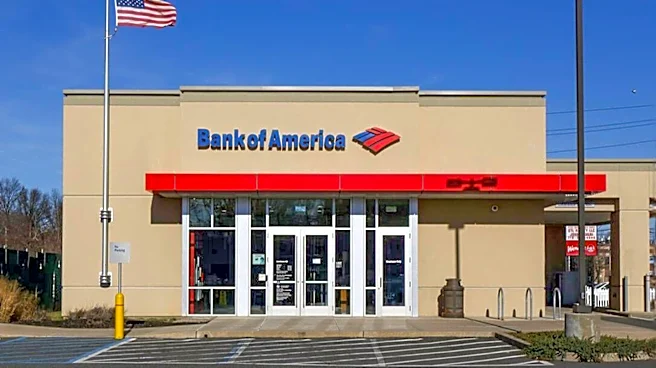
The U.S. Department of the Treasury's Office of Foreign Assets Control (OFAC) has announced an $11,662,930 settlement with Bank of America, N.A. This settlement addresses 475 apparent violations of various OFAC sanctions programs, including those targeting
Russia, Belarus, Iran, Burma, Somalia, narcotics, and global terrorism. The violations stemmed from Bank of America processing payments involving blocked banks, failing to properly prioritize alerts for customers matching blocked persons, not promptly updating watchlists after OFAC designations, and mishandling two business accounts linked to blocked individuals due due to human error. OFAC determined that these violations were non-egregious but were largely not voluntarily self-disclosed by the bank.
Why It's Important?
This settlement underscores the critical importance of robust compliance programs within financial institutions to prevent sanctions evasion and protect national security interests. The substantial penalty levied against Bank of America highlights the U.S. government's commitment to enforcing its sanctions regimes, even for non-egregious violations, particularly when they are not voluntarily disclosed. For the financial industry, this serves as a reminder of the severe consequences of inadequate screening processes, outdated watchlists, and human error in handling sensitive financial transactions. It also emphasizes the expectation for banks to proactively identify and report potential violations, as voluntary self-disclosure can often lead to reduced penalties. The case reinforces the need for continuous investment in compliance technology and training to navigate the complex landscape of international sanctions.
What's Next?
Following this settlement, Bank of America will likely face increased scrutiny from regulatory bodies and may be required to implement enhanced compliance measures to prevent future violations. Other financial institutions will likely review their own sanctions compliance programs, including their alert systems, watchlist update procedures, and employee training, to ensure they meet OFAC's stringent requirements. The U.S. Treasury, through OFAC, is expected to continue its aggressive enforcement of sanctions programs, with a focus on financial institutions that fail to adequately prevent illicit financial activities. This settlement could also prompt a broader industry-wide re-evaluation of how human error and technological deficiencies contribute to sanctions breaches, leading to potential new best practices or regulatory guidance.
Beyond the Headlines
The Bank of America settlement highlights a persistent challenge for large, global financial institutions: managing the immense volume and complexity of transactions while adhering to an ever-evolving set of international sanctions. The mention of 'human error' and 'failure to promptly update watchlists' points to systemic vulnerabilities that extend beyond individual oversight. This case could trigger deeper discussions within the financial sector about the role of artificial intelligence and advanced analytics in real-time sanctions screening and compliance, moving beyond traditional rule-based systems. Furthermore, it raises questions about the balance between regulatory burden and the practical realities of operational scale, and how financial institutions can foster a culture of compliance that permeates all levels of their organization to prevent such widespread, albeit non-egregious, violations.