







What's Happening?
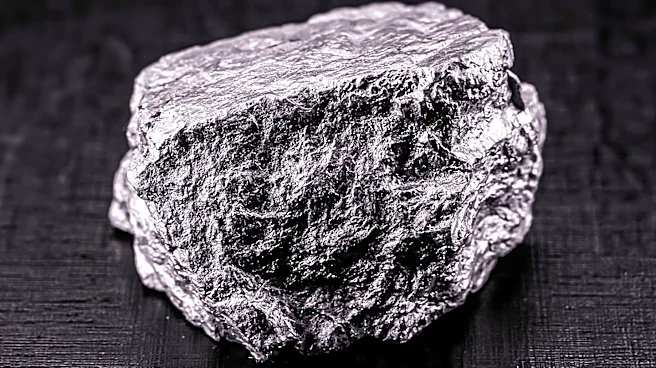
Lindian Resources has entered into an agreement with Carester to establish a rare earth oxide (REO) separation facility in Stepnogorsk, Kazakhstan. This partnership also includes a binding long-term offtake arrangement for heavy rare earth (HRE) products.
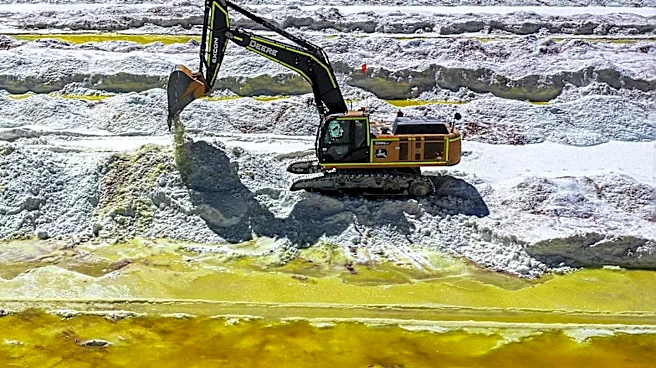
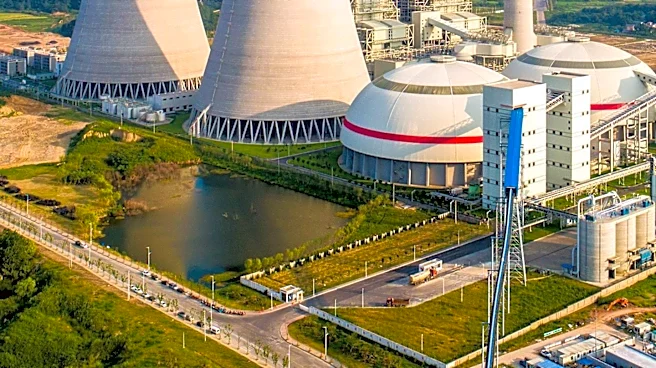
The collaboration involves technology and engineering services, with Carester and Australian consulting firm Tetra Tech Coffey tasked with conducting a definitive feasibility study (DFS) for an 8,000 tonnes per annum (tpa) solvent extraction and oxide separation plant. The DFS is anticipated to be completed by the end of 2026. The agreement stipulates a ten-year offtake for a mixed HRE compound, known as SEGH, with Carester having the option to purchase at least 70% of the annual SEGH output. The facility, which will be funded internally, is designed to produce separated REOs, including neodymium and praseodymium. Products from Lindian’s Kazakhstan operations are primarily destined for Carester’s Caremag Refinery in Lacq, France, a joint venture with the Japan Organization for Metals and Energy Security (JOGMEC) and Iwatani, backed by significant French and Japanese funding.
Why It's Important?
This development is significant for the global rare earth supply chain, particularly as countries seek to diversify sources away from China, which is a dominant player in the critical minerals market. The establishment of a new rare earth separation plant in Kazakhstan, supported by European and Japanese interests, contributes to building more resilient and varied supply routes for these essential materials. Rare earth elements are crucial for numerous high-tech industries, including electric vehicles, renewable energy technologies, and defense applications. By creating a 'mine-to-oxide' processing chain, Lindian Resources aims to capture more value from its rare earth production and expand its market reach. The project's strategic importance is further underscored by the support from Kazakhstan’s Ministry of Industry and Construction, recognizing its role in the local rare earths sector. This initiative could reduce reliance on single-source suppliers and mitigate risks associated with potential export restrictions, thereby enhancing the stability of critical mineral supplies for various industries.
What's Next?
The immediate next step is the completion of the definitive feasibility study (DFS) for the rare earth separation plant, expected by the end of 2026. Following a successful DFS, the project will move towards construction and operational phases. Lindian Resources plans to fund the facility internally, leveraging existing operations and liquidity. The long-term offtake agreement with Carester ensures a stable market for the heavy rare earth products, with potential for extension beyond the initial ten years. Carester will also provide process technology and engineering expertise, and will review Lindian’s SARECO facility for potential optimization. Furthermore, Lindian has indicated the possibility of processing additional rare earth feed sources from Kazakhstan, which could further expand the plant's production capabilities. The success of this project could encourage similar collaborations aimed at diversifying the global rare earth supply chain and fostering regional processing capabilities.
Beyond the Headlines
This partnership highlights a broader global trend towards securing critical mineral supply chains and reducing geopolitical dependencies. The involvement of French and Japanese entities in funding Carester’s refinery in France, which will receive products from Kazakhstan, illustrates a concerted effort by multiple nations to establish independent rare earth processing capabilities. This move is a direct response to the strategic vulnerabilities exposed by concentrated supply, particularly from China. The project's emphasis on utilizing existing local infrastructure in Stepnogorsk, such as power, water, and rail, suggests a focus on cost-efficiency and sustainable development within the rare earth sector. Beyond economic implications, such initiatives contribute to technological sovereignty, ensuring that key industries have reliable access to the materials needed for innovation and national security. The long-term impact could be a more diversified and geographically distributed rare earth industry, fostering greater stability and competition in the market.