




What's Happening?
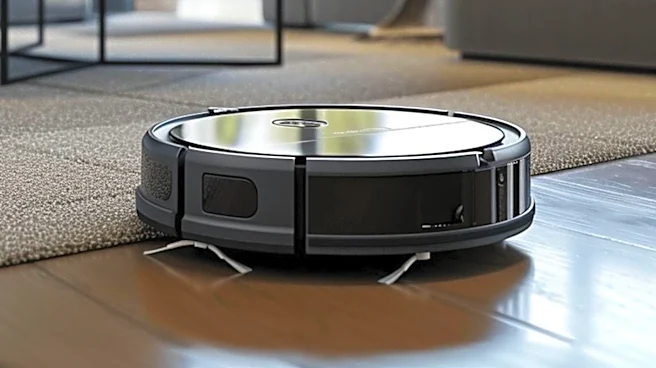
Dreame Technology is emerging as a significant innovator in the robot vacuum sector, directly challenging established brands like Dyson and iRobot's Roomba. The company is recognized for its advancements in home-help robots, which were showcased at the World
Humanoid Robot Games in Beijing. While the event featured robots performing complex tasks such as sprinting and high-jumping, Dreame Technology focused on developing robots capable of mundane household chores. This includes robots designed to make beds, serve drinks, tidy rooms, and even handle laundry and package collection. The emphasis is on creating practical, everyday robotic assistance for homes, reflecting a broader trend in China to lead in the development of humanoid robots for domestic use, building on its existing leadership in factory and warehouse robotics.
Why It's Important?
The rise of companies like Dreame Technology signifies a growing competitive landscape in the U.S. robot vacuum market, which has historically been dominated by a few key players. Increased competition can drive innovation, leading to more advanced features, improved performance, and potentially more affordable options for consumers. For U.S. consumers, this could mean access to a wider range of sophisticated home cleaning solutions, offering greater convenience and efficiency in daily life. For existing U.S. manufacturers, it presents a challenge to maintain market share and accelerate their own research and development efforts to stay competitive. The focus on 'home-help' robots also points to a future where robotic assistance extends beyond simple vacuuming to a broader array of household tasks, potentially transforming the domestic appliance industry.
What's Next?
The continued innovation from companies like Dreame Technology suggests a future where robot vacuums and other home-help robots will become increasingly integrated into daily life. Consumers can anticipate more advanced functionalities, such as enhanced navigation, improved cleaning capabilities, and the ability to perform a wider variety of chores. The competitive pressure is likely to push all manufacturers to invest further in AI and robotics research, potentially leading to breakthroughs in areas like object recognition, adaptive learning, and human-robot interaction. This could also lead to a diversification of product offerings, with robots specializing in different household tasks, moving beyond the current focus on floor cleaning.
Beyond the Headlines
The expansion of sophisticated home-help robots raises deeper questions about the future of domestic labor and the potential societal impact of widespread robotic assistance. While these devices offer convenience, they also prompt discussions about job displacement in certain service sectors and the evolving definition of 'home care.' There are also ethical considerations regarding data privacy and security, as these robots collect information about household layouts and routines. The increasing autonomy of these devices could also lead to a re-evaluation of human-technology relationships, as robots become more integral to personal spaces and daily routines. The long-term implications could include shifts in consumer expectations for convenience and a greater reliance on automated solutions for everyday tasks.